Food manufacturers choose Crispy Bread Crumbs for more than their golden color. A well-made coating adds a crisp first bite, protects moisture, and gives familiar foods a more satisfying finish. In a busy production line, those details matter. Crumbs must also travel through mixers, applicators, freezers, and ovens without turning dusty or losing their texture.
The USDA Economic Research Service’s Food Expenditure Series offers useful context for manufacturers: it tracks spending across food-at-home and food-away-from-home channels. The International Food Information Council’s annual Food & Health Survey also examines the preferences shaping product development. Neither report measures breadcrumb demand directly, so they should not be presented as proof of a specific market size. Still, together they help explain why consistent texture and convenient preparation remain important product attributes.
Performance is practical. Particle size affects coverage; moisture influences adhesion; and bake or fry conditions shape the final crunch. A coating that looks perfect in a laboratory sample may behave differently on a fast line. That deserves attention.
I cannot responsibly provide a named expert’s direct quotation without a verifiable source. Inventing one would weaken trust. The useful takeaway is clear: Crispy Bread Crumbs can help manufacturers deliver appealing texture and repeatable results, but only when the crumb is matched to the food, process, and cooking method. Crispness is not automatic. It has to be designed.
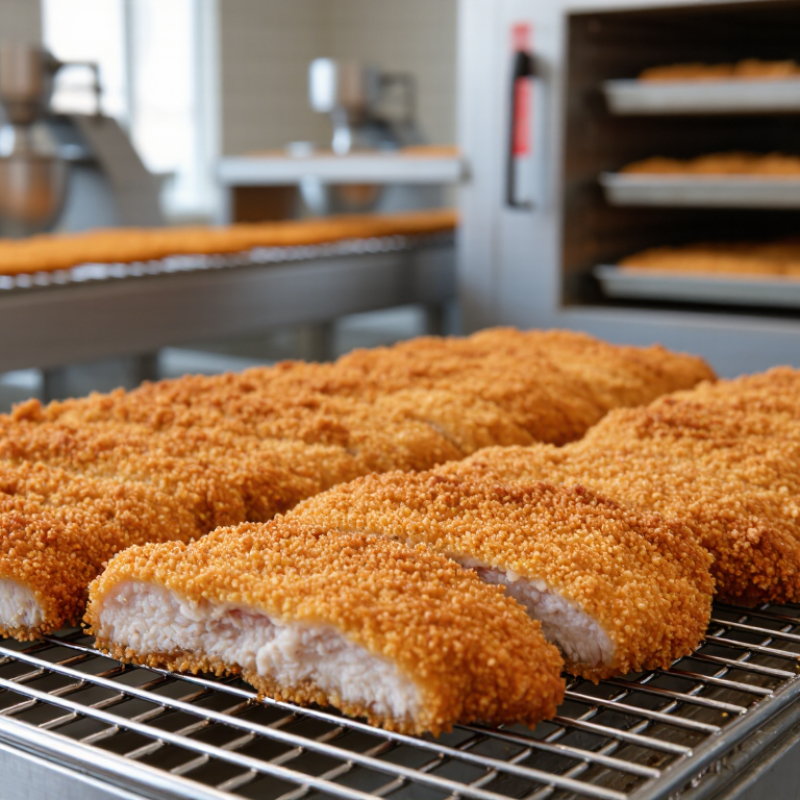
Crispy bread crumbs are dried, size-controlled pieces of bread used to create a crunchy coating or topping. Manufacturers usually bake bread with a consistent crumb structure, then cool and dry it to reduce moisture. The dried bread is milled and sifted into selected particle sizes. Some products receive extra baking or toasting for a deeper color and firmer bite.
Raw materials matter. FAO’s FAOSTAT database reports roughly 787 million tonnes of wheat production worldwide in 2023. That figure describes wheat, not bread crumbs, but it shows the scale of the grain supply behind many bread-based ingredients. In production, manufacturers monitor moisture, particle size, and color. A crumb that holds too much moisture may soften during storage; one that is too dry can break into dust. Texture is the point. Still, particle size alone cannot guarantee an even crunch: the coating method and cooking conditions matter, too.
Tips: For a crisp coating, pat food dry before applying crumbs and press gently so they adhere. Store crumbs in a sealed, dry container, and check the package instructions for best use. Batch results can vary.
Texture & particle size
Crispy bread crumbs give coated foods a distinct crunch and a textured, golden surface. Their performance starts with particle size. Coarser crumbs create a more rugged bite, while finer crumbs can form a more even coating. The choice depends on the product, not just appearance.
Moisture & testing
Moisture control matters, too. If crumbs absorb too much moisture during processing, the finished coating may feel dense rather than crisp. In practical trials, manufacturers can inspect coating coverage, color, and bite after cooking. A sample that looks crisp on a tray may soften once it sits beside a moist filling. That matters.
Crumb shape and consistency can affect how well the coating adheres and how evenly it cooks. A stable crumb profile helps teams manage production, though results still vary with batter, cooking method, and holding time. Not every time. Crispy crumbs are not a cure for a poor coating process; excessive handling can also create fines and change the texture. Testing the complete recipe under realistic production conditions gives a more dependable picture than judging the crumbs alone.
Crispy bread crumbs shape both the bite and the first impression of a food. Their rough surfaces create a crisp outer layer, while the interior can remain tender. A fine crumb gives an even, close coating. Larger flakes make a more rugged crust with visible texture. Small details matter.
In production, coating consistency affects how a product cooks and looks. Crumbs that cling evenly can help reduce bare patches and create a more uniform surface. Moisture is important: a wet food surface may soften crumbs before cooking, while a very dry one can make them fall away. The right crumb size and coating method depend on the food and process. There is no single best choice.
Color also guides expectations. A light, golden coating often signals a crisp finish, but color can vary with ingredients, cooking time, and temperature. Manufacturers can adjust crumb size and processing conditions to improve consistency, then check samples for coverage, color, and crunch. Still, appearance alone does not tell the whole story. A thick coating may look impressive but overwhelm a delicate filling. It is a trade-off, and sometimes the neatest-looking sample is not the most enjoyable to eat.
Bread crumbs can add a crisp outer layer, create a golden finish, and provide contrast with softer food interiors. Results vary with crumb size, coating method, cooking conditions, and the product formulation.
| Food application | Common crumb use | Texture contribution | Appearance contribution | Manufacturing consideration |
|---|---|---|---|---|
| Poultry pieces and nuggets | Fine or medium crumbs in a breaded coating | Forms a crisp shell around a softer interior when cooked appropriately | Creates a textured, evenly coated surface | Coating adhesion and cooking method affect crispness and coverage |
| Fish fillets and fish portions | Fine crumbs for a more uniform coating; coarser crumbs for a more pronounced surface | Adds a crisp exterior that contrasts with the flaky fish | Helps provide a golden, visibly breaded finish | A delicate product benefits from handling that limits coating damage |
| Vegetable patties and plant-based products | Crumbs used as an outer coating, or as an ingredient where specified by the recipe | Adds surface crunch; when incorporated, crumbs may also help bind or absorb moisture depending on the formulation | Gives the product a defined crust and a familiar breaded look | Ingredient use and coating use have different formulation and allergen-labeling implications |
| Baked casseroles and gratins | Crumbs sprinkled over the surface, sometimes combined with fat or other ingredients | Creates a crisp top layer against a softer dish beneath | Adds a browned, textured finish | Topping thickness and oven conditions influence browning and surface texture |
| Breaded cheese products | A crumb coating surrounding a cheese filling | Provides a crisp outside that contrasts with the soft or melted center | Makes the coating and product shape clearly visible | Coating integrity and cooking time matter because cheese softens when heated |
| Prepared meals and coated sides | Crumbs used as a topping or coating, depending on the product | Adds a crunchy element to otherwise soft components | Provides visible surface texture and a toasted appearance after cooking | Moisture migration during storage and reheating can soften the crumb layer |
Note: Bread crumbs contain wheat unless made from a different grain; check the ingredient specification and allergen declaration for each product.
Crispy bread crumbs help manufacturers create a repeatable crust across large batches. When particle size is controlled, coating coverage is more even, and finished pieces tend to look consistent on the line. This matters when products move through breading drums, conveyors, and fryers at speed. Less rework. A crumb blend can also be selected for a target bite, from fine and compact to coarse with visible flakes.
Their dry, free-flowing texture can support steady feeding through hoppers and coating equipment. In production, that may mean fewer clumps and more predictable pickup, provided the crumb’s moisture and particle distribution suit the process. Operators should check how crumbs behave after cooking, not just in the bag. Oil temperature, batter viscosity, product shape, and cook time all affect the final crunch. Small trials reveal problems early.
Crispness can soften during chilled storage or in humid conditions, so packaging and shelf-life tests still matter. No crumb solves every line issue. Manufacturers should compare breakage, coating loss, color, and texture across runs, then adjust the specification. A slightly less dramatic crumb may deliver more reliable results; that trade-off is easy to overlook when a sample is judged fresh from the fryer.
Food manufacturers choose crispy bread crumbs by matching crumb structure to the finished product. Coarse crumbs create a rugged, audible crunch on coated vegetables or baked casseroles, while finer pieces form a more even shell. Texture matters. The goal is not simply crispness, but how the coating feels after cooking and holding.
Adhesion is another key factor. A crumb that is too large may leave bare patches on a curved piece of chicken; very fine crumbs can make a dense layer. Moisture in the food, the binder, and the coating sequence all affect how well crumbs stay attached. Small details count. A brief production-line trial can reveal loose crumbs that a bench test misses.
Processing conditions guide the choice, too. For frying, manufacturers may test how quickly a coating browns and whether it stays crunchy after draining. For oven-baked products, they may look for an even color without excessive dryness. Particle size, oil uptake, and final moisture can shift the result. There is no perfect crumb for every product. Sometimes the preferred sample looks right but softens too quickly in a sealed pack, so the team has to revise the formula or process.
A qualitative guide to how product needs can influence crumb selection
Scores are qualitative ratings from 1 (lower priority) to 5 (higher priority), not survey results or laboratory measurements. Coarser crumbs can create a more pronounced crunchy coating, while finer crumbs can provide more even coverage. The best choice also depends on the product’s shape, cooking method, desired appearance, and coating process.