Finding a reliable China top Eco Series Mugs wholesale supplier requires more than comparing catalog prices. Buyers need clear material details, stable production, and responsive communication. A professional supplier should explain whether each mug uses bamboo fiber, recycled plastic, stainless steel, ceramic, or another material. Food-contact documentation matters. So do factory audits, sample testing, and traceable quality records.
In practical sourcing work, samples often reveal more than polished product photos. Check the mug’s weight, lid seal, surface finish, odor, print clarity, and heat resistance. A cup that looks attractive online may feel unbalanced in the hand. That small detail can affect customer reviews. Reliable manufacturers should also provide realistic minimum order quantities, production timelines, packaging options, and customization limits. Certifications deserve careful verification, not casual trust. “Eco-friendly” is not a complete technical claim.
This guide examines how to evaluate China-based wholesale partners for Eco Series Mugs. It considers product design, sustainable materials, quality control, pricing, communication, and shipping coordination. It also highlights questions buyers should ask before placing a large order. A low quotation may conceal weak packaging or inconsistent color matching. I have seen careful buyers overlook these issues. That is worth reflecting on. The best supplier is not always the cheapest one. It is the partner that can prove its promises, correct mistakes, and support consistent deliveries as your brand grows.
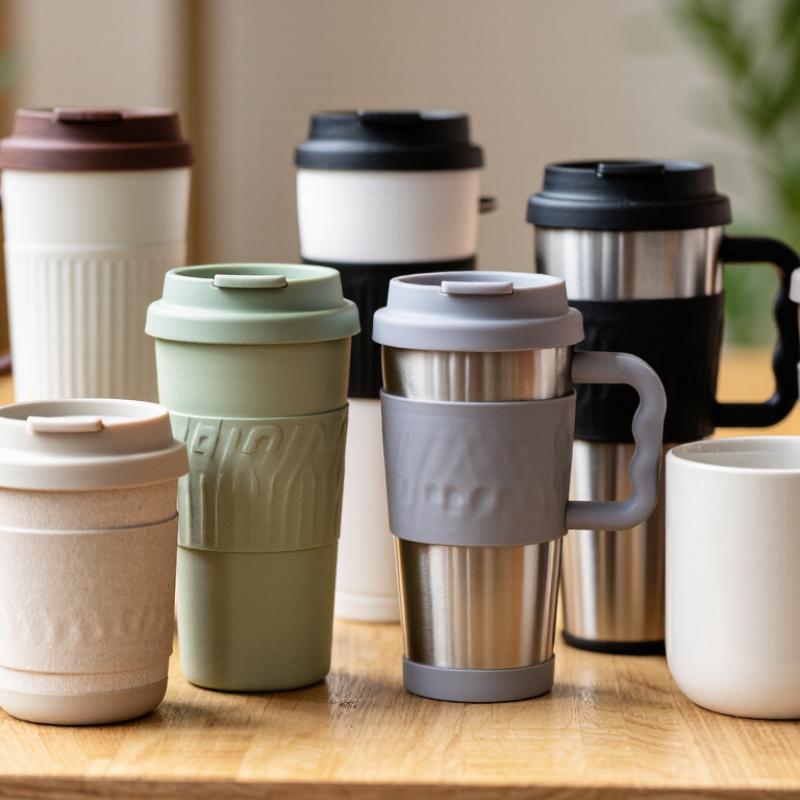
An eco series mug is defined by its full life cycle, not by a green label alone. In wholesale sourcing, I examine the material, production process, packaging, durability, and end-of-life options. Recycled stainless steel, responsibly sourced ceramic, bamboo fiber composites, and certified recycled plastics may reduce resource use. However, each material has trade-offs. Bamboo composites can contain binders that affect recycling. Ceramic lasts for years, but its weight increases transport emissions. No material is perfect.
A reliable supplier should provide clear material percentages, test reports, and production details. Food-contact safety, heat resistance, coating durability, and leak performance need independent verification. A mug that breaks after a few weeks is not truly eco-friendly. I have seen attractive samples fail after repeated washing. That was a useful reminder: appearance cannot replace evidence. For wholesale buyers, consistent quality matters because defective products create waste, returns, and unnecessary shipping.
Tips:
Ask for samples before placing a large order. Check the mug after repeated washing and daily handling. Request documentation for recycled content and food-contact testing. Also, review the packaging. Minimal, recyclable packaging is better, but protection still matters. A damaged shipment solves nothing.
China Top Eco Series Mugs Wholesale Supplier?
Choosing a China eco series mugs wholesale supplier requires more than checking a green label. Material selection affects durability, safety, cost, and disposal. Recycled stainless steel suits reusable travel mugs because it resists rust and repeated washing. Ask for the recycled content percentage and food-contact test reports. Do not accept vague claims. A precise material declaration builds trust.
Plant-based fibers can reduce virgin plastic use, but they need careful review. Bamboo fiber mixed with resin is not the same as pure bamboo. It may not be home-compostable. Recycled polypropylene offers light weight and good impact resistance for everyday cups. Glass provides a clean taste and strong chemical stability, yet it can break during shipping. Ceramic feels premium, though its heavier weight increases transport emissions.
A dependable wholesale supplier should explain every material layer, including lids, seals, coatings, and packaging. Request samples before placing a large order. Test the mug with hot coffee, cold drinks, repeated washing, and minor drops. Check for odor, leaks, staining, and lid deformation. Food-contact migration testing and production batch records add practical confidence. A supplier should also provide consistent dimensions and color control across batches.
No material is perfect. Recycled steel still requires energy during melting, while plant-based composites may contain difficult-to-separate resins. That trade-off deserves honest disclosure. Supplier evaluation should include factory communication, traceability, and realistic claims, not attractive wording alone.
When evaluating a China wholesale mug supplier, inspect evidence before accepting “eco” claims. McKinsey’s 2023 global consumer survey found that about 60% of consumers would change shopping habits to reduce environmental impact. That demand creates room for vague marketing. Ask for material traceability, recycled-content records, and recent third-party test reports. A reliable factory should explain where clay, stainless steel, silicone, and packaging materials originate.
Request samples from three production batches. Check glaze uniformity, handle strength, odor, heat retention, and dishwasher performance. Test the mug yourself. Small flaws often appear after repeated washing. For ceramic products, request lead and cadmium migration testing under the destination market’s food-contact rules. For stainless steel, verify the grade and corrosion resistance. ISO 9001 may show process control, while ISO 14001 indicates an environmental management system, but neither replaces product testing.
The OECD’s Global Plastics Outlook reports that global plastic waste has more than doubled since 2000, so packaging deserves attention too. Ask whether cartons use recycled fiber and whether unnecessary plastic sleeves can be removed. Review factory capacity, minimum order quantities, defect records, payment terms, and delivery history. A supplier with clear limitations is often safer than one promising everything. I would still audit the facility before a large order. Paperwork can look perfect. Reality sometimes does not.
Customization should begin with function, not decoration. Wholesale buyers can choose recycled stainless steel, bamboo fiber, glass, or certified food-grade plastics. Each material needs different testing and care instructions. A supplier should confirm capacity, lid design, insulation, printing method, and minimum order quantity. Even small details matter. A lid that leaks ruins customer trust quickly.
Quality control needs clear checkpoints. Ask for a pre-production sample, color approval, logo placement review, and finished-product inspection. Inspectors should check volume, surface scratches, odor, coating adhesion, and leak resistance. Random carton checks can reveal packing damage before shipment. Written inspection records create accountability. However, one approved sample cannot represent every production batch. That assumption needs careful review.
Certification options should match the destination market and mug material. Request current test reports for food contact safety, migration limits, heavy metals, and packaging materials. Environmental claims also need evidence, such as recycled content records or material composition reports. Certificates should show the factory, product scope, testing date, and issuing laboratory. Some documents look convincing but cover a different model. That is a common oversight. A dependable supplier explains limitations openly and updates records when materials change. Regular factory audits and traceable batch codes add further confidence for long-term wholesale programs.
China Top Eco Series Mugs Wholesale Supplier?
Ordering eco series mugs from China works best when specifications are clear from the beginning. Share the target capacity, material, lid style, colors, logo method, and expected quantity. A practical supplier should provide a quotation, sample schedule, production timeline, and packaging details. Request a physical sample before approving bulk production. Small issues matter, such as a loose lid, uneven coating, or an uncomfortable handle. Samples can still need revision. That is normal.
Pricing depends on more than the mug itself. Material choice, wall thickness, decoration, mold requirements, order quantity, and packaging all affect the unit cost. Recycled stainless steel may cost more than standard plastic alternatives. Custom colors and individual gift boxes can increase labor expenses. Ask whether the quotation includes sampling, tooling, inspection, inner cartons, and export packing. Freight rates also change with shipping method, destination, season, and carton volume. The lowest quote may not be the lowest final cost.
Reliable export service includes commercial invoices, packing lists, shipping coordination, and clear product specifications. For food-contact mugs, request relevant material and safety test documents for the destination market. Confirm carton markings and barcode requirements early. A pre-shipment inspection can check quantity, appearance, leakage, and packaging strength. Communication can still fail when measurements use different standards, so written approval records are valuable. Allow schedule space for production delays or port changes. Experiences vary, and no supplier estimate is perfect.
| Category | Key Dimension | Typical Industry Information | Buyer Considerations |
|---|---|---|---|
| Ordering Process | Product Selection | Choose mug material, capacity, shape, lid type, color, surface finish, and packaging format. | Confirm whether the product is intended for hot drinks, cold drinks, microwave use, or hand washing only. |
| Specification Confirmation | A formal specification should include dimensions, capacity, material composition, color reference, decoration method, carton details, and tolerance requirements. | Request a technical drawing or pre-production sample before approving bulk production. | |
| Sample Approval | Samples are commonly used to verify fit, finish, print quality, color, leakage resistance, and packaging protection. | Sample charges and courier costs may be separate from the bulk order and may vary by customization level. | |
| Purchase Order and Deposit | The purchase order normally states quantity, unit price, trade term, payment schedule, packaging, inspection standard, and delivery destination. | A deposit is often requested before production; the exact percentage must be agreed in the sales contract. | |
| Production and Inspection | Mass production may take approximately 20–45 calendar days after final approval, depending on materials, customization, season, and order volume. | Use a defined quality standard and arrange pre-shipment inspection when product consistency is important. | |
| Pricing Factors | Material Type | Bamboo-fiber blends, recycled plastics, stainless steel, glass, ceramic, and plant-based composites have different raw-material and processing costs. | Ask for the exact material percentage and relevant food-contact documentation rather than relying only on the term “eco.” |
| Order Quantity | Larger quantities generally reduce the per-unit allocation of setup, tooling, labor, and packaging costs. | Minimum order quantities often range from a few hundred to several thousand units, depending on the product and customization. | |
| Customization | Logo printing, special colors, embossing, molded structures, custom lids, and retail packaging can add setup or tooling charges. | Confirm whether artwork, color matching, plate fees, molds, and sample revisions are included in the quotation. | |
| Trade Term | EXW and FOB prices usually exclude some international freight and destination charges, while CIF includes freight and insurance to the named destination port. | Compare quotations using the same Incoterm, destination, currency, quantity, and packaging specification. | |
| Packaging and Logistics | Individual boxes, protective inserts, master cartons, palletization, dimensional weight, and port charges can materially affect landed cost. | Request carton dimensions, gross weight, net weight, and carton quantity to estimate freight accurately. | |
| Export Services | Export Documentation | Common documents include a commercial invoice, packing list, bill of lading or airway bill, and export declaration information. | Importers should verify destination-country requirements before shipment, including labeling and product compliance documents. |
| Compliance Support | Depending on the destination and material, buyers may request food-contact test reports, migration testing, chemical compliance documents, or packaging declarations. | Compliance requirements vary by market; identify the applicable regulations before placing the order. | |
| Shipping Options | Ocean freight is generally suitable for larger shipments, while air freight and express services are faster but usually more expensive per kilogram. | Select transport according to urgency, shipment volume, destination, customs requirements, and total landed cost. | |
| Container and Consolidation Planning | Smaller orders may be shipped as consolidated cargo, while larger orders may use a full container or multiple containers. | Check whether the quoted service includes origin handling, customs clearance, port fees, insurance, and destination delivery. | |
| Delivery and After-Sales Handling | A complete export arrangement should define shipment milestones, damage-claim procedures, shortage tolerance, replacement policy, and communication responsibilities. | Record carton counts and inspect goods promptly after arrival in accordance with the agreed claim period. |
Note: Lead times, minimum order quantities, pricing, certifications, and shipping charges are indicative industry ranges and must be confirmed against the final product specification, destination market, and purchase contract.