Archives


10 Tips for Sourcing Herb Breadcrumbs Wholesale?

Sourcing Herb Breadcrumbs wholesale can look simple until the first shipment arrives. The crumbs may be too damp, the herbs uneven, or the coating too coarse for your recipe. Price matters, but consistency matters more when every bag must perform the same way.

Dr. Elena Marlow, a food ingredient sourcing consultant, says, “A reliable breadcrumb supplier proves consistency before promising volume.” That principle shapes this guide. It encourages buyers to inspect ingredient lists, herb distribution, particle size, moisture control, packaging strength, and batch documentation. A bright green label means little if the product loses aroma after opening.

Small details matter. Ask for a recent sample, not an old showroom packet. Shake the bag gently. Look for powder collecting at the bottom. Check whether rosemary, parsley, garlic, or other seasonings remain evenly spread. Request clear allergen information and production specifications. Confirm minimum order quantities, lead times, storage conditions, and private-label options before negotiating a lower price.

Wholesale sourcing is not only a purchasing task. It is a quality decision. A cheaper offer may hide inconsistent texture or costly delivery delays. Still, no checklist catches everything. Supplier claims deserve verification, and first impressions can be wrong. The following 10 tips for sourcing Herb Breadcrumbs wholesale provide a practical framework for comparing suppliers, testing samples, reducing avoidable risks, and building a dependable supply relationship. Expect some revision. Your first supplier may not be your best supplier.
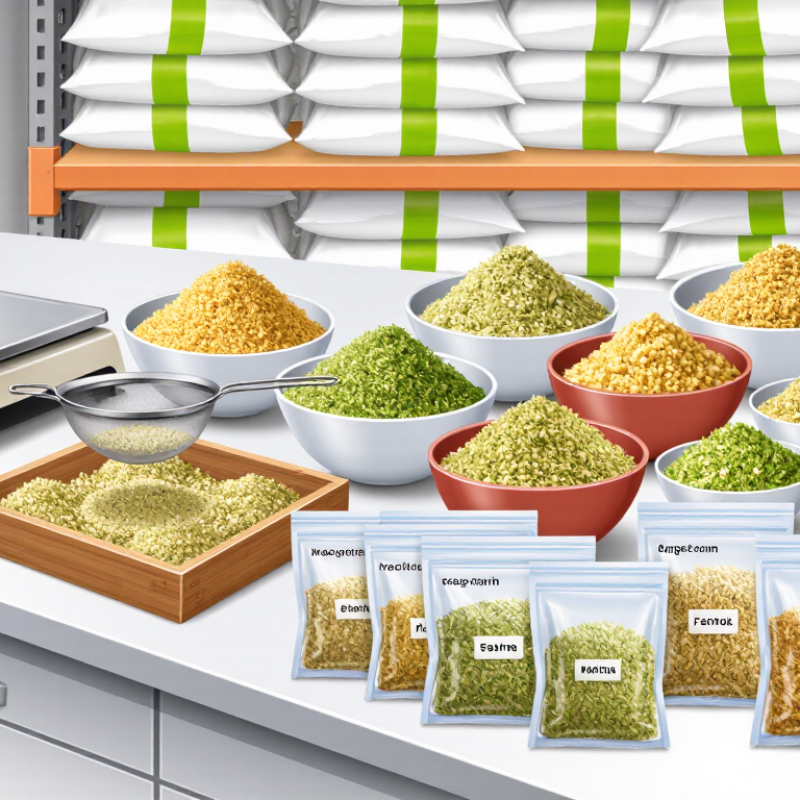
10 Tips for Sourcing Herb Breadcrumbs Wholesale?

Define Product Specs with Codex CXS 152-1985 and FDA Label Rules

When sourcing herb breadcrumbs wholesale, define the product before requesting prices. Codex CXS 152-1985 can guide wheat flour quality, but it does not replace a finished breadcrumb specification. Record crumb size, color, moisture target, herb identity, salt level, and permitted processing aids. Ask suppliers for a written formula and lot-specific certificate of analysis. It should show moisture, microbiological results, allergen status, and foreign-material controls. Small details matter. A 2-millimeter crumb behaves differently from a coarse, toasted crumb in frying and filling applications. I once treated “Italian herbs” as a clear specification; it was not. The phrase allowed inconsistent blends and made incoming checks difficult. Name each herb, its percentage range, and acceptable sensory limits.

For U.S. distribution, review the finished package against current FDA labeling rules. Ingredients generally appear in descending order by weight, including wheat flour, oils, salt, and herbs. Wheat must be declared as a major allergen in the required manner. Check the product name, net quantity, manufacturer or distributor information, Nutrition Facts requirements, and any voluntary claims. “Natural,” “gluten-free,” and similar statements need careful substantiation; do not copy supplier wording blindly. Codex guidance supports international communication, but FDA requirements control products marketed in the United States. Build a label approval step into purchasing. Compare approved artwork with the actual formula before every production run. This is easy to overlook. Keep retained samples, signed specifications, and traceability records for each lot. A practical supplier review also checks shelf-life evidence, packaging seals, storage temperature, and recall communication procedures.

10 Tips for Sourcing Herb Breadcrumbs Wholesale

Reference specification checkpoints for wheat flour used in herb breadcrumbs, aligned with Codex CXS 152-1985 and supported by FDA labeling requirements.

Codex quality checks

Ask suppliers for test results confirming moisture ≤15.5%, protein ≥7.0% on a dry-matter basis, ash ≤0.64%, and acid-insoluble ash ≤0.05% for the wheat flour ingredient. CXS 152-1985 applies to wheat flour, not automatically to the finished breadcrumb product.

FDA label checks

Confirm the product identity, net quantity, ingredient list in descending weight order, wheat allergen declaration, responsible party name and address, and Nutrition Facts labeling where required. Review 21 CFR 101.3, 101.4, 101.5, 101.9, and 101.105.

Sources: Codex Alimentarius, CXS 152-1985 “Standard for Wheat Flour”; U.S. FDA, 21 CFR Part 101. Supplier specifications should also define herb identity, particle size, microbiological limits, packaging, shelf life, and lot traceability.

Vet Suppliers Using GFSI Certification and ISO 22000 Requirements

When sourcing herb breadcrumbs wholesale, treat certification as evidence, not decoration. Ask suppliers for a current certificate from a GFSI-recognized scheme. Check the certificate scope, site address, product category, and expiry date. A certificate for packaging may not cover seasoned breadcrumbs.

ISO 22000 requirements should appear in daily controls. Review the supplier’s hazard analysis, allergen management, sanitation records, and traceability procedure. Herb ingredients can carry soil, moisture, pesticide residues, or microbial risks. Request recent certificates of analysis for breadcrumbs and each high-risk herb. Test results should match the actual production lot. Small details matter.

Ask how quickly the supplier can trace one pallet back to its raw materials. A strong system should identify the receiving date, lot code, processing line, and release decision. Request evidence of mock recalls and corrective actions from previous audits. Some suppliers provide polished documents but vague answers. That is a warning sign. Visit the facility when volume justifies the cost. Look for sealed ingredient containers, dry storage, clean conveyors, and clear allergen labels. Take notes, even when the visit feels reassuring. I have learned that confidence can hide missing records. Leave room for doubt.

Confirm foreign-material controls, metal detection checks, packaging integrity, and transport conditions. Define specifications for herb percentage, particle size, moisture, salt, and microbiological limits. Samples should be evaluated after cooking, not only in the bag. Taste can change. Supplier performance should be reviewed after several deliveries, because one successful shipment proves very little.

Check COAs Against FDA 21 CFR Part 117 Preventive Controls

When sourcing herb breadcrumbs wholesale, treat each Certificate of Analysis as a control document, not decoration. Under FDA 21 CFR Part 117, your hazard analysis should address pathogens, allergens, foreign material, pesticides, and chemical contaminants. Request a lot-specific COA with production dates, laboratory methods, detection limits, and clear pass/fail results. A generic annual certificate is weak evidence.

Pay close attention to Salmonella, Bacillus cereus, moisture, and water activity. Dried herbs can carry contamination into a low-moisture product.

CDC estimates that foodborne illness causes about 48 million illnesses, 128,000 hospitalizations, and 3,000 deaths yearly in the United States. That figure comes from its 2011 burden report, but the risk remains practical. Ask whether the laboratory uses ISO/IEC 17025 accreditation and whether sampling represents the full lot. It often does not.

Match every result against your written specifications and preventive-control records. Confirm allergen statements, supplier approval, sanitation controls, and traceability to the farm, processor, and final blend. FDA’s preventive-controls framework also expects verification, not blind trust in supplier paperwork. Keep retain samples when possible. Check packaging seams and inner liners on arrival. A clean COA cannot correct damaged cartons. I would also challenge unusually perfect results; real testing has variation, and a missing method can matter more than a passing number. Suppliers may resist extra questions. Keep asking.

Compare MOQ, Incoterms, and USDA Wheat-Price Benchmarks

Wholesale herb breadcrumbs look inexpensive until wheat, packaging, and freight costs move together. Set a wheat reference before requesting supplier quotes. USDA NASS reported approximately 1.97 billion bushels of all-wheat production in its 2024 Crop Production Summary. USDA ERS Wheat Outlook tracks monthly season-average farm prices. Use that benchmark as a worksheet input, not the finished product price. Herbs, drying, milling, blending, testing, and packing require separate cost lines.

Ask each supplier for three MOQ levels, such as one pallet, five pallets, and a full container. Record the price change at every level. A low MOQ may protect cash flow, but it often increases packaging and setup costs. Compare landed cost, not invoice cost. Under FCA, the buyer normally manages main transport. Under CIF, the seller pays freight and insurance to the named port, while risk transfers earlier. DDP can simplify delivery, but import duties and clearance responsibilities must be verified carefully. These distinctions follow ICC Incoterms 2020.

Build an RFQ with breadcrumb size, herb percentage, moisture limit, allergen controls, carton weight, shelf life, and lot coding. Ask for recent certificates and a retained sample. USDA Agricultural Marketing Service reports can help check grain and transportation conditions alongside the USDA wheat benchmark. My earlier mistake was comparing only price per kilogram. The cheaper offer later needed stronger cartons and created more breakage. Small detail. Recheck the assumption.

Verify Herb Traceability and FASTER Act’s Nine-Allergen Rules

Wholesale herb breadcrumbs need more than a low price and a clean-looking sample. Ask for botanical names, harvest regions, lot codes, and current certificates of analysis. A photographed pallet label is useful. Match it against the invoice and retained sample. WHO estimates contaminated food causes 600 million illnesses and 420,000 deaths each year. That figure makes traceability a purchasing control, not paperwork. FAO’s State of Food and Agriculture 2023 reports that 13.2% of food is lost between harvest and retail. Moisture, damaged sacks, and long storage can blur herb identity and quality.

For United States sales, check the FASTER Act carefully. It made sesame the ninth major food allergen. Breadcrumbs may also contain wheat, milk, egg, or soy through seasoning and shared equipment. Request a written declaration covering all nine allergens, sanitation procedures, changeover controls, and current facility records. Review the FDA Food Traceability Final Rule framework, especially critical tracking events and key data elements. One weak point remains: a supplier’s “natural herbs” statement may hide mixed origins or changing processors. Ask questions before approval. Keep a sealed reference sample from every lot. It is not perfect, but it exposes color, aroma, particle size, and contamination differences during receiving.

10 Tips for Sourcing Herb Breadcrumbs Wholesale: Verify Herb Traceability and FASTER Act’s Nine-Allergen Rules

A practical wholesale sourcing checklist for ingredient identity, supply-chain documentation, allergen controls, and U.S. labeling review.

No. Sourcing Tip What to Verify Evidence or Record to Request Practical Acceptance Benchmark FASTER Act / Allergen Relevance
1 Define the exact product specification Confirm crumb size, bread type, herb blend, moisture target, color, flavor profile, packaging format, and intended application. Approved product specification, ingredient statement, product sample, and certificate of analysis template. Every requested characteristic is measurable or clearly described before quotations are compared. Ask whether the formula contains or may contain any of the nine major U.S. allergens.
2 Trace every herb to its origin Identify the country or region where each herb was grown, harvested, dried, processed, and packed. Ingredient-origin statement, lot-level traceability record, supplier approval record, and batch coding explanation. A finished lot can be linked backward to the relevant herb lots and forward to shipment or customer records. Allergen law does not replace ingredient traceability; origin records support investigation and recall readiness.
3 Check herb identity and authenticity Verify the declared botanical or common name, plant part used, and protection against substitution, dilution, or undeclared fillers. Botanical identity documentation, supplier specifications, test reports, and a documented authenticity program where applicable. The declared herb names, specifications, and batch records are consistent across documents and packaging. Accurate ingredient identity is necessary for a complete ingredient declaration and allergen assessment.
4 Review food-safety controls for herbs Evaluate controls for microbial contamination, foreign material, pesticides, heavy metals, and other hazards relevant to the herb supply. Recent certificate of analysis, hazard analysis, preventive-control information, sanitation records, and applicable test results. Testing and controls are risk-based, current, and linked to the specific product or lot rather than copied generically. Allergen compliance is one part of food safety and should be reviewed alongside other preventive controls.
5 Confirm the wheat status of the breadcrumbs Determine whether the bread base contains wheat, whether wheat is intentionally added, and whether cross-contact is possible. Current formula, ingredient statement, allergen questionnaire, wheat-control procedure, and validated label review. The product specification, formula, packaging text, and allergen statement give the same answer. Wheat is one of the nine major food allergens recognized under U.S. federal law; it must be declared when present.
6 Screen the full formula against all nine allergens Review every bread, herb, spice, flavor, carrier, processing aid, and rework ingredient for allergen status. Signed allergen matrix and formulation review covering milk, eggs, fish, crustacean shellfish, tree nuts, peanuts, wheat, soybeans, and sesame. All nine allergens are assessed individually, with a documented reason for each “present,” “absent,” or “cross-contact risk” result. The FASTER Act added sesame as the ninth major food allergen in the United States, effective January 1, 2023.
7 Verify sesame controls specifically Check sesame in the bread, seasoning, herb blend, shared equipment, rework, storage areas, and transportation process. Sesame-specific questionnaire, sanitation validation or verification records, line-clearance checklist, and label approval record. Sesame is not treated as an optional question and is addressed in both the formula review and cross-contact assessment. Sesame is a major allergen under the FASTER Act; when present as an ingredient, it must be identified on the U.S. food label.
8 Evaluate segregation and cross-contact controls Review allergen storage, production sequencing, equipment cleaning, utensils, rework, employee practices, and changeover controls. Allergen-control plan, sanitation standard operating procedures, environmental or product verification records, and corrective-action history. Controls are written, implemented, periodically verified, and supported by records for the actual manufacturing line. Advisory statements should not substitute for effective prevention and accurate mandatory allergen labeling.
9 Match labels and lot documentation before ordering Compare the approved formula, ingredient list, allergen declaration, net contents, lot code, and country-specific labeling requirements. Packaging artwork, finished-product label, lot-code format, bill of materials, and pre-shipment label approval. No shipment is released when the label, formula, or allergen record is inconsistent or incomplete. For U.S. sales, major allergens must be declared in the ingredient list or in a “Contains” statement as required by applicable law.
10 Build a documented approval and recall process Set minimum supplier requirements, change-notification rules, incoming inspection, complaint handling, mock recall frequency, and record-retention expectations. Supplier agreement, change-control form, receiving checklist, complaint log, recall procedure, and traceability exercise results. Traceability can be tested from finished product back to ingredient lots and from ingredient lots forward to affected customers. Prompt access to accurate lot and allergen records supports regulatory response, withdrawal, and recall decisions.
Regulatory note: In the United States, the nine major food allergens are milk, eggs, fish, crustacean shellfish, tree nuts, peanuts, wheat, soybeans, and sesame. Sesame became the ninth major food allergen under the Food Allergy Safety, Treatment, Education, and Research Act, effective January 1, 2023. Confirm the current legal and labeling requirements for the destination market before purchase or import.
Close
Enter your email address to receive special offers!
linkedin facebook pinterest youtube rss twitter instagram facebook-blank rss-blank linkedin-blank pinterest youtube twitter instagram