What Is a Hotel Bed Sheet Set and What Does It Include?
A Hotel Bed Sheet Set is more than a fitted sheet placed over a mattress. In professional hospitality, it usually includes a flat sheet, fitted sheet, pillowcases, and sometimes a duvet cover or bed skirt. Each piece supports cleanliness, comfort, presentation, and faster room turnover. Some suppliers also offer matching pillow protectors, mattress pads, or decorative runners. The exact package can vary. That detail is easy to overlook.
The feel begins with the fabric. Cotton percale may feel crisp and cool, while cotton sateen feels smoother and slightly warmer. Thread count matters, but it does not tell the whole story. Fiber quality, weaving, finishing, and laundering habits also shape the guest experience. Michael J. Breus, PhD, a well-known sleep specialist, has said, “Your bedroom should be a sanctuary.” In a hotel, that sanctuary often starts with fresh white sheets, tight corners, and a pillowcase without wrinkles.
This guide explains what belongs in a Hotel Bed Sheet Set and why each item matters. It also considers practical concerns, including durability, sizing, breathability, stain visibility, and commercial washing. A set that looks luxurious online may become rough after repeated hot laundering. That possibility deserves attention. The best choice is not always the highest thread count. It is the set that stays comfortable, clean-looking, and dependable after many occupied nights.
Definition and Purpose of a Hotel Bed Sheet Set
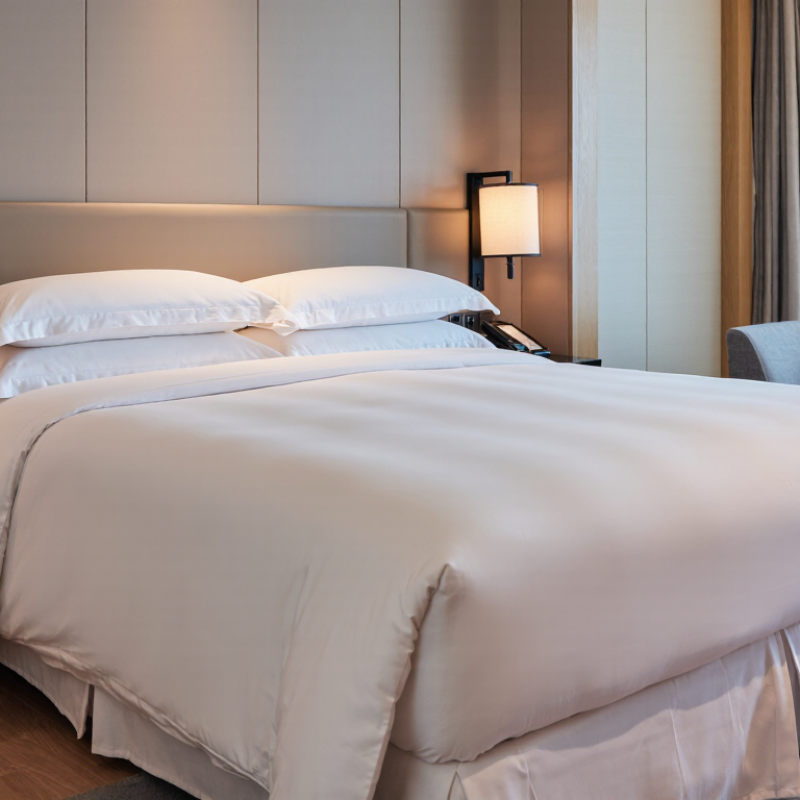
A hotel bed sheet set is a coordinated group of linens prepared for one guest bed. Its core purpose is simple: create a clean, comfortable, and repeatable sleeping surface. Most sets include a fitted sheet, a flat top sheet, and pillowcases. Some properties add a duvet cover, mattress protector, or decorative cover separately. The exact package is not universal. This detail matters when comparing supplier specifications or planning room turnover.
In professional housekeeping, the set supports hygiene control and consistent presentation. Freshly laundered sheets form a barrier between the sleeper and the mattress. The fitted sheet grips the corners, while the top sheet adds coverage and easier bed making. Pillowcases protect pillows and help staff identify a complete change. Fabric choice also affects use. Cotton may feel breathable, while blended fabric can dry faster and resist wrinkles. Thread count alone does not prove quality. Weave, fiber strength, finishing, and laundering performance deserve equal attention.
From an operational view, a useful set must fit the mattress securely and survive repeated washing. Housekeeping teams often check stains, loose seams, thinning fabric, and poor elastic before reuse. A visually white sheet is not automatically hygienic. It still needs documented washing and drying procedures. In practice, descriptions can be misleading. A “complete set” may exclude the duvet cover or mattress protector. I would verify every included piece, size, fabric, and care requirement before purchase. Small omissions create delays, guest complaints, and unnecessary replacement costs.
What Is a Hotel Bed Sheet Set and What Does It Include? - Definition and Purpose of a Hotel Bed Sheet Set
| Component | Typical Quantity | Main Purpose | Common Hotel Specification | Included in Every Set? |
| Flat Sheet | 1–2 pieces | Creates a clean sleeping layer and protects the guest from direct contact with blankets or duvets. | White or light-colored, tightly woven cotton or cotton-blend fabric; sized with generous tuck-in allowances. | Usually |
| Fitted Sheet | 1 piece | Covers the mattress and helps keep the sleeping surface smooth and secure. | Elasticated corners or edges; pocket depth must match the mattress height and any mattress topper. | Common, but some properties use two flat sheets instead. |
| Duvet Cover | 1 piece | Encases a duvet or comforter, providing a washable protective layer and a finished appearance. | Durable fabric with secure closures such as buttons, ties, or concealed fasteners. | Often included in duvet-style bedding systems. |
| Pillowcases | 2–4 pieces | Protect pillows, support hygiene, and complete the presentation of the made bed. | Envelope, standard, or king-size styles; fabric is usually coordinated with the sheets. | Usually |
| Mattress Protector | 1 piece | Helps protect the mattress from moisture, stains, allergens, and routine wear. | Fitted construction; may use quilted padding or a waterproof membrane depending on property requirements. | Often treated as a separate protective layer. |
| Pillow Protectors | 1 per pillow | Adds an extra hygienic barrier beneath the decorative or standard pillowcase. | Zippered or envelope closure; washable and sized to the pillow insert. | Usually separate from the basic sheet set. |
| Blanket or Coverlet | 1 piece | Provides an additional warmth layer or decorative covering. | Lightweight, washable, and selected according to the room climate and hotel operating standards. | Optional |
| Bed Skirt or Base Cover | 1 piece | Conceals the bed base and creates a neat, finished appearance. | Sized to the bed frame; commonly used with traditional bed bases rather than platform beds. | Optional |
Note: The exact contents of a hotel bed sheet set vary by property, bed size, climate, laundry procedures, and the selected bedding system. A basic set most commonly consists of sheets and pillowcases, while protectors, duvet covers, blankets, and bed skirts may be supplied separately.
Essential Components Included in a Hotel Bed Sheet Set
A hotel bed sheet set is a coordinated group of linens prepared for a guest bed. It usually includes a fitted sheet, a flat sheet, and pillowcases. The fitted sheet covers the mattress directly. Its elastic edges should hold firmly without pulling loose during sleep. The flat sheet creates a clean layer between the sleeper and the blanket. Pillowcases protect pillows and maintain a consistent appearance across the room.
The essential components may vary by hotel and bedding system. Some sets include a duvet cover, while others use a flat sheet with a washable blanket. A mattress protector is often used, but it is usually purchased separately from the sheet set. The protector helps reduce moisture, dust, and accidental stains reaching the mattress. Pillowcases may have envelope flaps or simple openings. Both designs can work when they fit securely and remain easy to change.
From a housekeeping perspective, fabric performance matters more than an impressive thread-count claim. Cotton blends often dry faster and resist repeated commercial washing. Pure cotton can feel cooler, but it may wrinkle more easily. Check the fitted sheet’s pocket depth before ordering. A beautiful set becomes frustrating when corners lift at night. Small details matter. I once assumed matching colors meant a complete set, but the missing duvet cover proved otherwise. Inspect seams, hems, closures, and laundering instructions carefully. A reliable set should feel smooth, remain breathable, and survive frequent washing without becoming thin too quickly.
Common Materials, Weaves, and Thread Counts
A hotel bed sheet set usually includes a fitted sheet, flat sheet, and pillowcases. The fabric choice controls comfort, durability, and washing performance. Cotton remains common because it feels breathable and absorbs moisture. Polyester dries faster and resists wrinkles. Cotton-polyester blends can reduce replacement costs, although they may feel less natural against the skin. Linen offers stronger airflow and a textured surface. Lyocell feels smooth, but its care requirements deserve attention.
Weave changes the sleeping experience. Percale uses a simple one-over, one-under structure, creating a crisp, cool hand. Sateen uses a longer surface float, so it feels smoother and warmer. A higher thread count is not automatically better.
ASTM D3775 provides methods for measuring woven fabric count, but manufacturers may report figures differently. Some count individual plies inside a yarn, which can inflate the number. That shortcut can mislead.
Textile Exchange’s Materials Market Report 2024 estimates that global fiber production reached about 124 million tonnes in 2023, with polyester representing roughly 57 percent. This explains why blended bedding remains widespread in commercial laundry systems. In practice, I would compare fiber content, weave, seam strength, and shrinkage results before trusting thread count alone. A 300-thread-count percale sheet may feel cooler than a 600-thread-count sateen sheet. Small details matter. Check the label, then test the fabric after washing. Even careful specifications can miss real-world softness, pilling, or heat retention.
Standard Sizes and Fit for Different Hotel Beds
A hotel bed sheet set usually includes a fitted sheet, a flat sheet, and two or more pillowcases. The correct size matters more than thread count. A standard twin mattress measures about 39 by 75 inches, while a full mattress measures 54 by 75 inches. Queen beds usually measure 60 by 80 inches, and king beds measure 76 by 80 inches. California king beds are narrower and longer, at about 72 by 84 inches.
Measure the mattress first.
Hotel mattresses often include a 12- to 16-inch comfort layer, so pocket depth needs careful checking. A fitted sheet with a 14-inch pocket may slip from a 16-inch mattress during housekeeping. Flat sheets need enough side length for a firm tuck, especially on platform beds. The International Sleep Products Association’s 2024 industry statistics show continued demand for larger mattress formats, making queen and king sizing especially important in guest rooms. However, size labels are not perfectly consistent across properties. A king sheet can fit differently in two hotels. That is an easy detail to overlook.
The 2024 State of the Industry report from the American Hotel & Lodging Association also emphasizes operational consistency and guest cleanliness expectations. In practice, color-coded size tags, elastic corner bands, and measured linen inventories reduce fitting errors. A small mismatch becomes visible quickly: loose corners, exposed mattress edges, or a pillowcase that bunches around the insert. These details deserve a final room check.
What Is a Hotel Bed Sheet Set and What Does It Include?
A hotel bed sheet set typically includes a fitted sheet, a flat sheet, and pillowcases. The chart compares standard mattress widths and lengths to help match sheet sets with different hotel bed sizes.
Size guide: Twin and Full beds are commonly used for single or compact rooms, while Queen and King beds are widely used in standard hotel rooms. California King mattresses are longer and narrower than standard King mattresses.
Quality, Care, and Selection Considerations
What Is a Hotel Bed Sheet Set and What Does It Include?
Quality, Care, and Selection Considerations
A hotel bed sheet set usually includes a fitted sheet, a flat sheet, and two pillowcases. Some sets also include duvet covers, mattress protectors, or extra pillowcases. The exact contents depend on the supplier and bed size. Check the measurements carefully. A deep mattress can quickly defeat a shallow fitted sheet.
Quality begins with fabric selection. Long-staple cotton often feels smooth and withstands repeated washing. Cotton-polyester blends may resist wrinkles and dry faster. Percale offers a crisp, cool touch, while sateen feels softer and warmer. Thread count can help, but it should not guide the entire decision. Extremely high numbers may reflect complicated counting methods rather than better fabric. Touch, weave, stitching, and shrinkage control matter more.
Care affects service life. Wash sheets with mild detergent and avoid overloading the machine. High heat can weaken fibers and damage elastic. Dry until slightly damp, then fold or place them on the bed. This reduces deep creases. Inspect seams after every cleaning cycle. Small tears grow quickly in busy rooms. Even careful selection has limits. A soft sheet may wrinkle more, and a durable blend may feel less natural. That trade-off deserves honest testing under real laundry conditions. Samples should be washed several times before bulk purchasing. White fabric also needs consistent stain treatment, because harsh chemicals can cause yellowing or fabric damage.
