Archives


Why Choose Heavy Duty Non Slip Mats for Global Buyers?

For global facility managers, a floor mat is not merely an entrance accessory. It can influence footing, cleaning workload, worker confidence, and replacement costs. The Heavy Duty Non Slip Mat is designed for demanding areas, including factory entrances, commercial kitchens, warehouses, hospitals, and loading zones. These spaces face tracked-in water, oil residue, mud, and repeated cart traffic.

Industry evidence supports closer attention to floor safety. The UK Health and Safety Executive has consistently identified slips and trips as leading causes of workplace injuries. Its workplace injury statistics have reported slips and trips at roughly one-quarter of non-fatal injuries in recent years. The U.S. Bureau of Labor Statistics also continues to record thousands of serious workplace injuries involving falls each year. A mat cannot remove every hazard. It can reduce exposure when correctly selected, installed, and maintained.

Details matter. A nitrile rubber backing should remain stable on the intended floor. Raised drainage patterns can help move water away from walking surfaces. Dense fibers can capture grit before it reaches polished interiors. However, performance depends on actual conditions, not marketing language. Buyers should request abrasion results, slip-resistance test methods, dimensional tolerances, fire information, and cleaning guidance. Standards such as ASTM F2913 or ANSI/NFSI B101.1 may provide useful testing references, but certification claims require verification from suppliers. Even a strong product may curl, clog, or lose grip when neglected. That limitation deserves attention. Global buyers choosing a Heavy Duty Non Slip Mat should evaluate lifecycle performance, site conditions, and supplier reliability together.
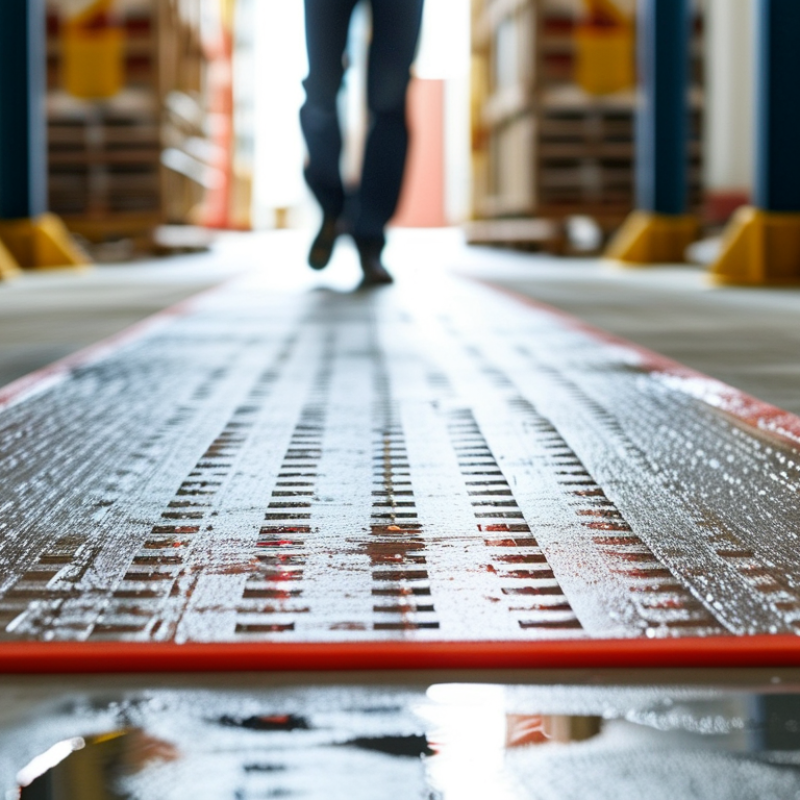
Why Choose Heavy Duty Non Slip Mats for Global Buyers?

What Are Heavy Duty Non Slip Mats?

Heavy duty non slip mats are floor coverings designed for demanding workplaces and busy public areas. They usually combine dense rubber, PVC, or similar resilient materials with a raised, textured surface. This pattern helps shoes and equipment maintain contact with the floor. Many models also include drainage holes, beveled edges, or reinforced backing.

These mats are commonly placed near factory lines, loading areas, commercial kitchens, workshops, and entrances. A good mat can reduce slipping risks, support standing comfort, and protect the floor from dirt or minor impacts. In practical use, thickness matters. A thin mat may curl under a trolley, while a very thick mat can create a trip point. Surface texture matters too. Deep patterns may improve grip, but they can be harder to clean.

For global buyers, material selection should match the working environment. Oil-resistant construction may suit mechanical areas, while drainage designs can help where water regularly collects. Check temperature tolerance, load capacity, edge design, and cleaning requirements before ordering. Requesting samples is wise. Product descriptions sometimes sound stronger than real performance. We have seen mats that gripped well when dry but moved slightly on smooth, wet floors. That detail deserves testing. Installation also affects safety; an uneven floor, loose corner, or trapped debris can reduce the mat’s value. Each facility needs its own assessment.

How Heavy Duty Non Slip Mats Improve Workplace Safety

Why Choose Heavy Duty Non Slip Mats for Global Buyers?

How Heavy Duty Non Slip Mats Improve Workplace Safety

In warehouses, kitchens, and production areas, small spills can change a safe walkway quickly. Heavy duty non slip mats help create a stable surface under demanding daily use. Their textured tops improve shoe contact with the floor. Raised patterns can also guide water, dust, and light debris away from standing areas.

The details matter. A mat with beveled edges reduces trip risks near doorways and workstations. Strong backing helps limit movement when carts pass over it. Drainage holes are useful near sinks, loading zones, and cleaning stations. In my experience, workers stand longer with less discomfort when mats provide moderate cushioning. That may reduce fatigue, though results depend on footwear, posture, and task design.

Mats are not a complete safety solution. A wet mat can still become slippery if it is dirty or poorly installed. Curled corners create hazards. Workers may also move mats aside when cleaning becomes difficult. Regular inspection should check edges, backing, drainage, and surface wear. Cleaning schedules should match the site’s traffic and spill levels. Product data should confirm load capacity, temperature tolerance, and chemical resistance. Requirements differ across regions, so buyers should review local workplace guidance and conduct a site-specific risk assessment. Sometimes, the better choice is a simpler mat that staff will maintain consistently.

Key Materials and Features Behind Their Durability

Heavy-duty non-slip mats depend on material science, not thickness alone. Nitrile rubber performs well around oils, grease, and moderate industrial heat. It also resists cracking better than many softer PVC blends. EPDM rubber suits outdoor entrances because it handles sunlight, rain, and temperature changes.

Surface texture matters just as much. Raised diamonds or fine ribs create channels for water and debris. Drainage holes help prevent a slippery film beneath the mat. Closed-cell foam improves cushioning, but excessive softness can reduce stability. Beveled edges also lower trip risk, especially where carts or forklifts cross the mat. ASTM F1637 recommends maintaining walking surfaces that are clean, level, and free from abrupt height changes.

The numbers deserve attention. The U.S. Bureau of Labor Statistics recorded 865 fatal occupational injuries from falls, slips, and trips in 2022. A mat cannot eliminate every hazard, yet its construction can support better floor control. In field use, I would check the backing every month. It should remain flat, grippy, and free from hardened residue. Small flaws matter. A high-friction surface may still fail when saturated with oil, while a thick mat may curl after repeated washing. Buyers should request test information for abrasion resistance, water drainage, chemical exposure, and temperature range. Claims without test conditions are weak evidence.

Why Choose Heavy Duty Non Slip Mats for Global Buyers? - Key Materials and Features Behind Their Durability

Material / Construction Key Durability Features Slip-Resistance Design Typical Temperature Range* Resistance Profile Best-Fit Applications Important Buyer Considerations
100% Nitrile Rubber Dense, resilient rubber compound with strong tear resistance and good shape recovery under repeated foot traffic. Raised diamond, ribbed, or textured surface increases traction; beveled edges help reduce trip hazards. Approximately -30°C to 120°C, depending on formulation and exposure time. Very good resistance to oils and grease; generally suitable for wet and high-traffic areas. Commercial kitchens, workshops, factories, service counters, and industrial entrances. Heavier and typically more expensive than PVC; verify chemical compatibility with strong solvents.
Nitrile-Blended Rubber Balances flexibility, wear resistance, and production cost while retaining useful oil resistance. Molded traction patterns and textured top layers provide grip in routine commercial use. Commonly around -20°C to 100°C, depending on the blend. Good resistance to moderate oil, grease, water, and abrasion; performance varies with blend ratio. Retail entrances, light industrial zones, warehouses, and food-service areas. Ask for the rubber composition and test data rather than relying only on the term “rubber.”
Flexible PVC Abrasion-resistant, easy to process, and available in perforated or molded constructions for different duty levels. Open-grid patterns, raised ribs, and drainage holes help improve footing and reduce standing liquid. Approximately -10°C to 60°C for many flexible grades. Good water and abrasion resistance; oil and low-temperature performance depend strongly on the formulation. Indoor entrances, wet rooms, locker rooms, retail areas, and general commercial facilities. May become less flexible in cold conditions; confirm plasticizer, odor, and restricted-substance requirements.
TPE / Thermoplastic Elastomer Flexible, lightweight, and recyclable in some product systems; supports molded edge and surface designs. Soft-touch textured surfaces can provide comfortable traction for prolonged standing. Often approximately -20°C to 80°C, depending on polymer type. Good resistance to water and general wear; chemical and heat resistance vary by formulation. Office, retail, hospitality, light commercial, and ergonomic standing workstations. Request compression-set, hardness, and aging data for heavy industrial applications.
Polypropylene Carpet Surface with Rubber Backing Tufted or needle-punched fibers trap dirt and moisture while the backing improves dimensional stability. Textile pile provides surface friction; rubber backing helps prevent movement on smooth floors. Commonly suitable for normal indoor temperatures; avoid prolonged extreme heat. Good resistance to dirt and routine moisture; backing quality determines resistance to curling and wear. Office lobbies, hotels, public buildings, shops, and covered entrance areas. Requires regular vacuuming or extraction cleaning; not ideal for areas with standing oil or water.
Modular Rubber Tiles Interlocking or loose-laid sections distribute traffic loads and allow damaged pieces to be replaced individually. Textured tops and drainage channels provide traction in demanding wet or oily environments. Typically approximately -30°C to 100°C, subject to rubber formulation. Strong general wear resistance; material-specific resistance to oils, acids, and solvents must be verified. Factories, production lines, loading areas, gyms, workshops, and large entrance zones. Requires a stable, reasonably level subfloor; seams should be checked during maintenance.
*Technical note: Temperature ranges and resistance levels are typical industry guidance, not universal guarantees. Actual performance depends on compound formulation, thickness, surface design, cleaning chemicals, exposure duration, floor condition, and installation quality. Buyers should request product-specific test reports and applicable safety documentation.

How Global Buyers Can Choose the Right Mat

Global buyers choosing heavy-duty non-slip mats should start with the working environment, not the catalogue photo. A busy entrance needs a different surface from a workshop beside oily machinery. Start with the floor. Measure length, width, drainage needs, and expected foot or trolley traffic. A mat that looks thick may still curl at the edges. That small failure can create a real trip risk. Ask for material data, underside design, weight, thickness, and test reports from the supplier. Clear documents make comparisons more reliable.

Match the surface to the hazard. Raised channels can guide water away from entrances, while open-grid designs may suit areas needing faster drainage. For grease-prone workspaces, check whether the compound is designed for that exposure and whether cleaning agents affect it. Do not rely on the phrase “non-slip” alone. Request slip-resistance results, temperature limits, and abrasion information under recognized testing methods. Requirements differ by country, so buyers should confirm applicable workplace and import rules with qualified local advisers. Details matter.

Installation deserves equal attention. Choose a stable size, beveled edges, and a backing that fits the floor. Confirm packing dimensions, delivery conditions, replacement availability, and care instructions before ordering. I have seen buyers focus on unit price and overlook cleaning labor or frequent replacement. That calculation was incomplete. Test it first. A small sample can reveal odor, movement, drainage, and comfort under real shoes. Leave room to rethink the purchase after one week of use. Practical evidence often beats a polished sales sheet.

Installation, Maintenance, and Long-Term Value

Why Choose Heavy Duty Non Slip Mats for Global Buyers?

Installation, Maintenance, and Long-Term Value

Heavy-duty non-slip mats perform best when installation matches the site. Before placement, inspect the floor for oil, dust, moisture, or loose tiles. Clean and dry the surface completely. A mat should lie flat without curled corners or trapped air. In busy entrances, allow enough space for natural foot placement. Rushing this step can create a trip hazard.

Keep it simple.

From my experience, regular cleaning protects grip better than occasional deep washing. Shake out loose grit daily in high-traffic areas. Use mild detergent and warm water when dirt builds up. Avoid harsh solvents because they may damage rubber or reduce surface traction. Lift the mat during cleaning, then dry both sides before reinstalling it. Check the backing, edges, and drainage holes every week.

Long-term value depends on more than the purchase price. A dense mat can reduce slip risks, protect flooring, and collect moisture near entrances. That may lower cleaning labor and floor repair costs over time. Measure actual traffic, weather exposure, and replacement frequency before ordering large quantities. Some buyers choose the thickest option, but that is not always practical. Heavy mats may be difficult to move, store, or clean. I have seen good products fail because their size did not suit the doorway. Local temperature, accessibility needs, and workplace requirements also deserve careful review.

Close
Enter your email address to receive special offers!
linkedin facebook pinterest youtube rss twitter instagram facebook-blank rss-blank linkedin-blank pinterest youtube twitter instagram