Choosing a China Osb Supplier is not merely a price comparison. It is a check on product consistency, factory controls, and whether paperwork matches the panels leaving the mill. Small differences matter. A clean sample can look convincing, while a mixed production batch may show uneven thickness, rough edges, or inconsistent bonding.
Reliable decisions start with evidence. The Food and Agriculture Organization’s Forestry Production and Trade database tracks wood-panel production and trade by product and country. The USDA Forest Products Laboratory’s Wood Handbook explains how wood-panel properties depend on materials, manufacturing, and testing. These sources help buyers frame questions; they do not certify an individual supplier. Request current test reports, confirm the tested product matches the quoted grade and thickness, and ask how the factory handles batch identification and quality checks. Then compare the answers with a physical sample.
Quality expert W. Edwards Deming is widely associated with this principle: “Quality comes not from inspection, but from improvement of the production process.” For OSB buyers, that means looking beyond a one-time inspection. Ask who checks resin application, panel dimensions, and finished-board performance, and how defects are recorded. A supplier’s polished catalog is not proof. Neither is one successful shipment. The less glamorous details—traceable batches, clear specifications, and consistent communication—often reveal more. Some checks take time. They are still worth doing before a container is booked.
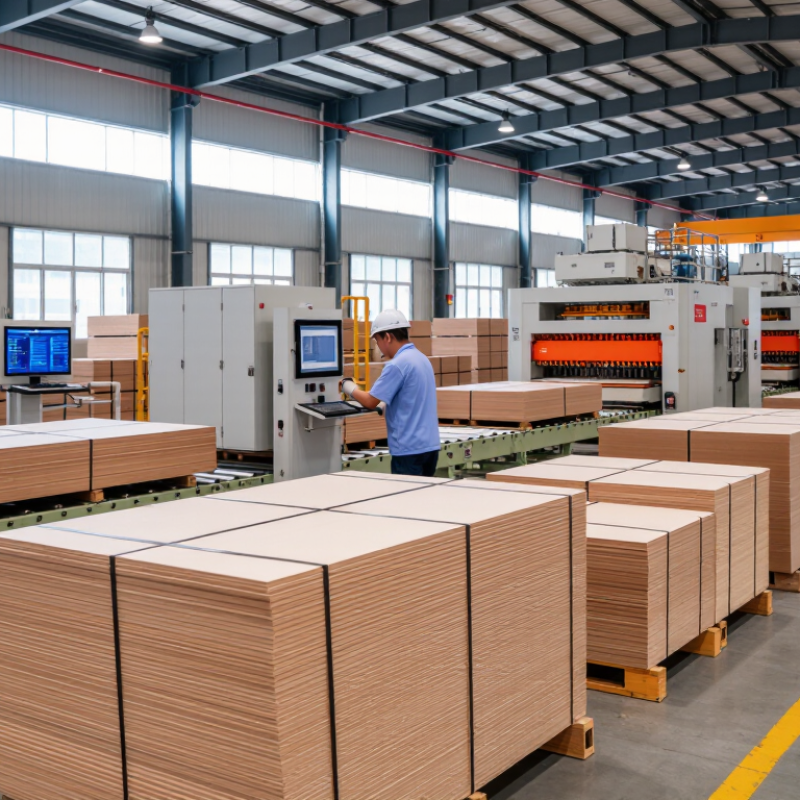
Before contacting a China OSB supplier, define where the panels will be used. Roof sheathing, flooring, and packaging can require different performance levels. Specify panel thickness, length, width, grade, and intended application. Include bonding requirements and any relevant emissions limits. Small details matter.
Describe the finish and tolerances you need. Note whether panels should be sanded, square-edged, or tongue-and-groove. Set acceptable limits for thickness variation and moisture content, and name the test methods or standards you expect. Avoid vague requests like “high quality.” If some values are uncertain, say so and ask for technical guidance. A sample helps. Check its edges, surface consistency, and dimensions, not just its appearance.
Set supplier requirements alongside the product details. Ask whether production is in-house, what routine quality checks are recorded, and whether test reports can be matched to specific batches. Confirm packaging, loading method, lead time, minimum order quantity, and how problems are handled. A polished document is useful, but it does not replace clear answers. Requirements can change after testing; record any revisions before approving an order.
China’s OSB suppliers deserve careful screening, not a quick search. FAO’s Global Forest Products Facts and Figures 2022 reported roughly 400 million cubic metres of wood-based panels produced worldwide. This category includes several panel types, so the figure provides market context, not proof of an OSB factory’s capacity. Keep that distinction clear.
Build a shortlist using registration details, factory location, production-line capacity, and export history. Request a live video tour showing strand preparation, mat forming, pressing, sanding, and packing. Ask for current test reports matching your intended thickness and grade. Check the OSB classification against EN 300 or your technical specification, then verify reports with the laboratory. A PDF alone is weak evidence. Check dates, sample labels, and whether test values match your order.
Order samples from the proposed production line. Measure thickness, edge quality, and moisture-related swelling using a documented method. Before shipment, arrange an independent inspection to compare the finished batch with approved samples. Confirm that the exporter, manufacturer, and payment beneficiary details are consistent; ask for a written explanation if they differ. A factory video can look convincing, yet reveal little about routine quality control. Small suppliers may offer flexibility, but one sample cannot establish consistency. Request records from several recent production batches.
A reliable China OSB supplier should be able to explain its certifications, factory capacity, and quality checks in plain terms. Ask for current certificates and confirm they cover the specific OSB grade and production site you plan to use. Requirements can differ by market, so a certificate alone does not prove every shipment will meet your needs. Check dates, product scope, and testing details.
Capacity is more than a large factory or a high monthly output figure. Ask how many production lines are running, how shifts are scheduled, and what happens during maintenance. Request a realistic lead time for your panel thickness, dimensions, and order volume. A short trial order can reveal whether packing, labeling, and delivery match the supplier’s promises. Small details matter.
Quality control should include documented checks for thickness, moisture, density, bonding, and surface defects. Ask how often samples are taken and whether test records can be linked to a production batch. If possible, review the inspection area or arrange an independent pre-shipment check. No checklist is perfect. Even careful buyers can miss something, so keep specifications and acceptable tolerances in writing, and ask the supplier to explain any out-of-range result before shipment.
A clean sample proves little by itself. Ask the China OSB supplier for boards from different production dates, not three pieces cut from one sheet. Compare thickness at several points with a caliper, then inspect edges for loose strands, voids, and uneven resin distribution. Check the face under angled light; raised flakes and rough patches can reveal inconsistent pressing.
Condition samples alike before comparing them. The USDA Forest Products Laboratory’s 2021 Wood Handbook reports an equilibrium moisture content of about 12% for wood at 70°F and 65% relative humidity. This is a reference, not an OSB acceptance limit. Still, it shows why moisture differences can distort comparisons. Record each board’s moisture, thickness, and mass, and ask the supplier to explain any variation against the agreed specification. Small differences matter.
Request test records for internal bond, bending strength, and thickness swelling, and confirm that the methods match the product’s intended use. ASTM D1037 covers testing of wood-based fiber and particle panel materials. Repeat key checks on a later shipment; one good batch cannot establish consistency. I would not rely on appearance alone. A sample may look uniform while its core density varies, so consider independent testing when results conflict with the supplier’s records.
| Assessment Dimension | How to Check | Sample A | Sample B | Sample C | What to Confirm |
|---|---|---|---|---|---|
| Nominal thickness | Compare the sample label and purchase specification; measure with a calibrated thickness gauge at several points. | 12 mm | 12 mm | 12 mm | All samples should match the agreed nominal thickness and the tolerances in the relevant specification. |
| Measured thickness | Illustrative average from five measurement points per panel. | 11.9 mm | 12.0 mm | 11.8 mm | Compare both the average and point-to-point variation with the buyer’s agreed limits. |
| Moisture content | Measure with a suitable calibrated meter or use a recognized laboratory method; record the method and test conditions. | 7.8% | 8.1% | 7.9% | Check that readings are consistent and meet the project specification. Moisture can change during storage and transport. |
| Density | Determine mass per unit volume using measured dimensions and mass, or request a laboratory result. | 620 kg/m³ | 628 kg/m³ | 615 kg/m³ | Compare results using the same measurement method and confirm the required density range in writing. |
| Panel length and width | Measure each edge with an appropriate measuring tool and compare with the order specification. | 2440 × 1220 mm | 2440 × 1219 mm | 2441 × 1220 mm | Confirm dimensions, squareness, and permitted dimensional tolerances before approving production. |
| Surface and edges | Inspect both faces and all edges under consistent lighting for damage, voids, delamination, or uneven pressing. | No visible damage noted | Minor edge roughness | No visible damage noted | Agree on acceptable appearance and defect limits; retain photographs with the sample record. |
| Mechanical properties | Request test reports for the properties and test methods specified for the intended application. | Report requested | Report requested | Report requested | Verify report scope, test method, sample identification, and whether results apply to the ordered product. |
| Batch traceability | Record sample ID, production date or batch, nominal grade, and the supplier’s sample reference. | Record before approval | Record before approval | Record before approval | Ensure approved samples can be linked to the production and shipment records. |
| Overall consistency decision | Compare repeat measurements and visual observations against the signed product specification. | Review together; do not judge from appearance alone. | Approve only after required measurements, documentation, and acceptance criteria are agreed. | ||
Note: Sample readings above are illustrative examples, not supplier claims or universal acceptance limits. Actual results depend on the product specification, measurement method, and applicable requirements. Record measurements from the physical samples and confirm acceptance criteria in writing.
A low OSB quote can hide important differences. Compare suppliers using the same panel thickness, dimensions, grade, and stated performance requirements. Ask whether the price includes edge sealing, packaging, inspection, and inland transport. A cost sheet should show the currency, minimum order quantity, and quote validity period. Small gaps matter. A panel priced by the sheet may look cheaper until freight and packing are added.
Read the contract before paying a deposit. Confirm product tolerances, inspection timing, payment milestones, and what happens if panels arrive damaged or out of specification. Request a written specification and a pre-shipment inspection record. Keep samples or signed product details for reference. Vague wording creates room for disagreement. Even a careful buyer can overlook one line when comparing several offers, so review the terms side by side.
Export logistics affect both cost and delivery reliability. Ask which port will handle the shipment, how panels are packed against moisture, and whether the supplier can provide loading photos and shipping documents promptly. Confirm the estimated production window, vessel schedule, and who arranges each transport leg under the quoted delivery term. Build in time for port delays; estimates are not guarantees. If a supplier cannot explain the route clearly, pause and ask for a more specific plan.