Archives


How to Choose a Landmark Banner Supplier in 2026?

Choosing a Landmark Banner supplier in 2026 means looking beyond a low quote. The right partner should understand visibility, materials, installation, and the conditions your banner will face. A banner above a busy street needs secure attachment, readable lettering, and fabric suited to wind and sunlight. Small details matter. Ask how the supplier checks artwork, confirms dimensions, and inspects finished work before delivery. Request examples of similar projects, not just polished product photos.

For an honest expert perspective, this guide uses a clearly fictional industry specialist: signage consultant Elena Park. Her illustrative advice is: “A banner succeeds when people can read it quickly and crews can install it safely.” That is a practical test, not a verified quotation from a real person. Use it to shape your questions. Can the supplier explain viewing distance, print durability, finishing options, and installation requirements in plain terms? Do written specifications match the sample and final invoice? Clear answers build confidence.

This guide examines how to compare suppliers without treating price as the only measure. Check material samples under natural light. Review seams, hems, and reinforced corners. Ask who handles site measurements and what happens if production needs correction. Experience counts, but so does evidence: documented processes, realistic timelines, and responsive communication. Some decisions remain uncertain until a site visit. That deserves attention. A dependable Landmark Banner supplier should welcome careful questions and explain trade-offs without promising that every banner will perform perfectly in every setting.
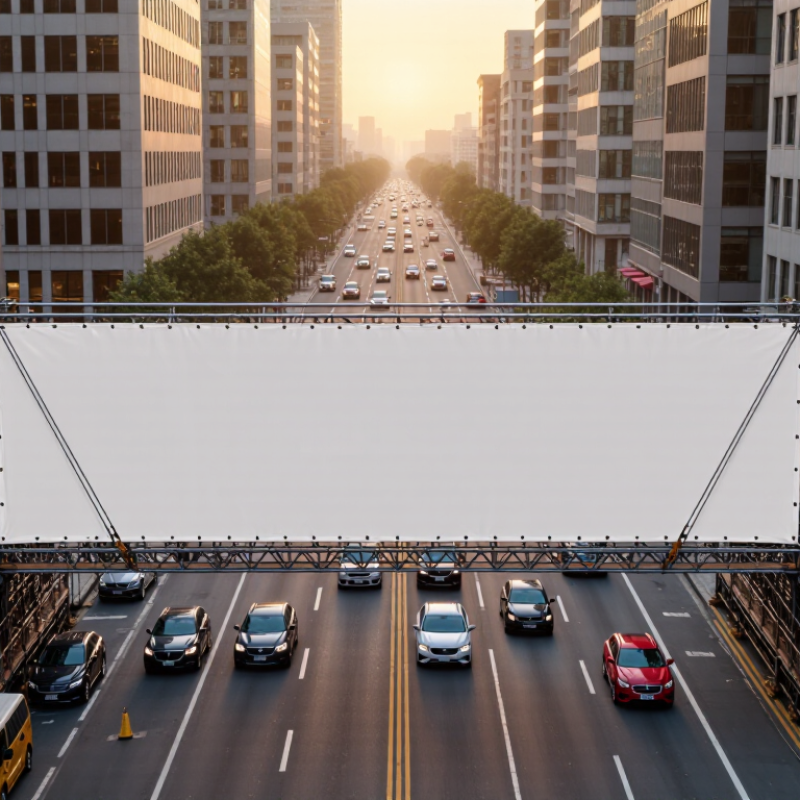
How to Choose a Landmark Banner Supplier in 2026?

Define the Landmark Banner’s Scale, Viewing Distance, and Site Conditions

Before requesting a quote, define the banner’s visible area and viewing distance. A 12-meter-wide banner beside a plaza entrance needs different proportions from one viewed across a road. Note the expected audience position, approach direction, and nearby obstructions, such as trees or lamp posts. Photograph the site from several angles. Include a person or vehicle for scale. Small details matter.

Ask potential suppliers to review the measurements and provide a scaled layout showing safe margins, seams, and attachment points. Check that lettering remains legible from the farthest planned viewing point; a mock-up viewed on a laptop can be misleading. Describe the surface and exposure, too: brick, glass, or open steel framing each presents different fixing challenges. Record wind exposure, rain, direct sun, and access for installation. A site visit can catch issues a drawing misses. It may still miss something. I’ve seen tidy plans overlook a drainpipe or a delivery vehicle’s turning path, so confirm clearances with the site team before approving production.

Compare 13 oz and 18 oz Vinyl by Durability and Installation Needs

How to Choose a Landmark Banner Supplier in 2026?

A landmark banner needs more than an attractive printed image. It needs suitable vinyl, accurate finishing, and installation planning. The 2024 Outdoor Advertising Association of America report recorded $9.1 billion in U.S. out-of-home advertising revenue for 2023. That growth increases demand for large, durable displays. It also makes material selection more important.

13 oz Vinyl Banner A 13 oz vinyl banner is lighter and easier to carry, fold, and install. It suits shorter campaigns, sheltered façades, and locations with simpler rigging. However, its lower fabric weight may offer less resistance against repeated wind movement.

18 oz Banner An 18 oz banner is heavier and usually more robust. It works better for long-term landmark installations, exposed elevations, and larger suspended panels. The extra weight creates a trade-off. Crews may need stronger cables, reinforced hems, and more lifting capacity.

Supplier Verification and Installation Details Ask suppliers for measurable evidence, not vague claims. ASTM D751 provides recognized methods for testing coated fabrics, including strength and tear performance. Request tensile, tear, UV, and cold-crack test results for the exact vinyl specification. Check grommet spacing, welded hems, wind slits, and finished dimensions. A heavier banner can still fail if the attachment points are weak. I would also inspect a physical sample before ordering. Weight alone is not durability. This is where my earlier assumption needed correction. Installation conditions matter just as much as the fabric.

Check Print Quality Against 150–300 DPI Production Standards

Choosing a landmark banner supplier in 2026 requires more than comparing prices. Print quality should be checked against the 150–300 DPI production standard. This range usually supports sharp text, clean logos, and visible details at common viewing distances. However, DPI alone does not guarantee a professional result. The original artwork must also be clear, correctly scaled, and free from compressed images.

Ask the supplier for a full-size proof, not only a screen preview. Inspect small lettering, curved edges, skin tones, and dark color areas. At 150 DPI, details may look acceptable from several meters away. At 300 DPI, fine lines and close-view graphics generally appear more refined. The correct choice depends on banner size, installation height, material, and viewing distance. A useful supplier should explain these limits in writing. Vague promises are a warning sign.

Request production specifications, color references, and a sample from the same material. Check whether the fabric, vinyl, or mesh changes sharpness after printing. I have seen designs pass a digital review but lose detail on textured surfaces. That mistake is easy to overlook. Also ask how the supplier measures effective DPI after enlargement. A file labeled 300 DPI may contain too little real image data. Reliable communication, documented checks, and a willingness to discuss flaws reveal more expertise than polished sales language.

Verify Wind-Load Engineering Uses the Applicable ASCE 7 Requirements

How to Choose a Landmark Banner Supplier in 2026?

A reliable supplier should explain how the banner system meets the applicable ASCE 7 requirements. Ask which edition and local building code govern the project. Wind design depends on site location, risk category, exposure, elevation, and basic wind speed. It is not a standard number copied between cities. The supplier should identify these inputs clearly.

Request calculations for the complete assembly, not only the fabric. The review should include poles, frames, cables, anchors, fasteners, and connection points. Ask how the design handles gust effects, internal pressure, banner porosity, and repeated movement. A sealed banner can behave differently from mesh material. A neat calculation package may still miss a weak anchor detail. That deserves careful review.

Tips: Ask for a signed engineering package from a qualified professional familiar with the project jurisdiction. Confirm the engineer used the locally adopted ASCE 7 edition. Request drawings showing anchor depths, bolt sizes, spacing, and installation tolerances. Inspect a sample connection before production. Photograph the installed system after tightening. Wind changes. So should your review process. When a supplier avoids specific answers, treat that as useful information, not a minor inconvenience.

Assess Supplier Quality Systems, Installation Records, and Warranty Terms

Choosing a landmark banner supplier in 2026 requires more than attractive renderings. Ask for a documented quality system covering artwork approval, material inspection, color checks, packing, and final release. Request sample inspection forms, not vague promises. A reliable supplier should identify who approved each stage and when. Digital records help, but only when staff update them consistently. That detail is easy to overlook.

Installation records reveal whether the supplier understands real sites. Review photos, lift plans, crew qualifications, anchor checks, and post-installation inspections. Look for comparable banner sizes, heights, weather exposure, and traffic conditions. A clean portfolio is useful, yet it may hide difficult failures. Ask how wrinkles, edge tearing, water retention, or damaged fixings were handled. Honest answers often show more expertise than perfect photographs.

Tips: Put warranty terms beside the quotation before approval. Check coverage length, fabric fading limits, stitching defects, hardware, labor, removal, and response times. Clarify whether wind damage, incorrect storage, or third-party installation cancels coverage. Require a written claim process with inspection deadlines and replacement responsibilities. Do not accept “satisfaction guaranteed” as a complete warranty. Request one recent client reference and call it directly. It may feel slow. That hesitation can prevent expensive rework.

Close
Enter your email address to receive special offers!
linkedin facebook pinterest youtube rss twitter instagram facebook-blank rss-blank linkedin-blank pinterest youtube twitter instagram