Choosing reliable China top fancy suit fabric suppliers can shape the quality, comfort, and commercial success of a clothing collection. Global buyers often need more than attractive patterns. They require stable quality, accurate colors, suitable fabric weight, and dependable delivery. Fancy Suit Fanric may include jacquard, brocade, textured wool blends, velvet, and refined polyester constructions. Each option creates a different impression under showroom lighting.
Experienced buyers usually request fabric samples before placing large orders. A small swatch can reveal surface shine, hand feel, stretch recovery, and color consistency. It can also expose weaknesses that online photos hide. Ask suppliers about GSM, fiber content, usable width, shrinkage, pilling resistance, and minimum order quantities. Request lab dips when color accuracy matters. Confirm packing details, production timelines, inspection procedures, and export experience.
Good suppliers communicate clearly and document important specifications. They may provide test reports or certifications from recognized organizations, depending on the fabric and market requirements. However, no supplier is perfect. Delays, shade differences, or sample-to-bulk changes can still happen. Careful buyers leave time for approval and independent inspection. That is not distrust. It is practical risk management.
This guide examines leading Chinese suppliers from a global purchasing perspective. It considers product range, manufacturing capability, customization support, quality control, pricing structure, and service reliability. The goal is not to promote one factory blindly. It is to help buyers compare evidence, ask sharper questions, and select Fancy Suit Fanric that performs well from first fitting to final sale.
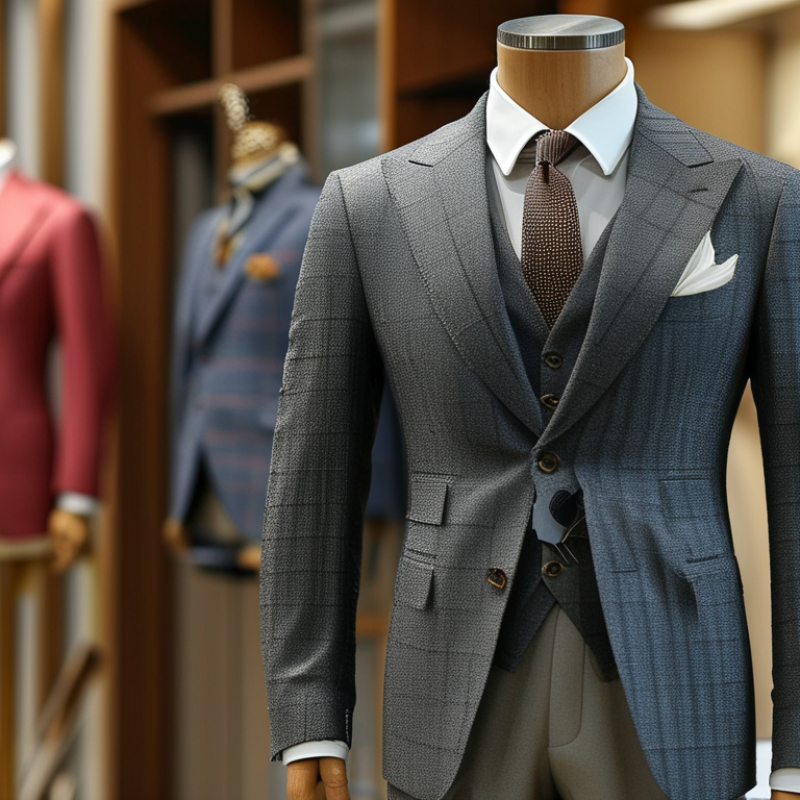
Fancy suit fabric selection begins with fiber. Wool provides natural recovery, warmth, and a refined hand. Wool blends can improve durability and reduce production costs. Viscose adds softness, while polyester supports crease resistance and color stability. For premium tailoring, fiber percentages should match the garment’s intended climate and use.
Weave creates the visual character. Jacquard gives raised patterns and controlled shine. Dobby offers small geometric textures without excessive decoration. Twill often improves drape and abrasion resistance. Check the fabric under daylight. Indoor lighting can hide uneven yarns and harsh reflections. GSM also matters. Lightweight fabric around 180–220 GSM suits warmer regions. Heavier cloth around 240–300 GSM feels fuller and more structured.
Finish changes both appearance and performance. Brushing can create a softer surface, while calendering adds smoothness and subtle luster. Water-repellent finishes may help during light rain, but they are not waterproof guarantees. Ask suppliers for shrinkage, colorfastness, pilling, and seam-slippage test results. A production sample should be checked after pressing and dry cleaning. A sample can still mislead. Small-batch testing is safer than trusting a swatch alone. Reliable Chinese suppliers should explain fiber content, weave construction, GSM tolerance, finishing chemicals, and inspection procedures clearly. Their technical documents should match the delivered roll, not merely describe an ideal product.
A practical comparison of commonly sourced fancy suit fabrics, organized by fiber content, construction, weight, finishing options, performance characteristics, and typical applications.
| Fabric Type | Typical Fiber Composition | Common Weave or Pattern | Typical GSM | Common Finishes | Key Performance Characteristics | Typical Suit Applications |
|---|---|---|---|---|---|---|
| Superfine Wool Suiting | 100% sheep wool; commonly identified by micron fineness such as approximately 17–19.5 microns | Plain weave, twill, birdseye, or subtle self-stripe | 220–280 g/m² | Decatizing, crabbing, softening, anti-pilling treatment, and optional water-repellent treatment | Breathable, naturally resilient, good drape, effective moisture buffering, and suitable for year-round tailoring depending on weight | Business suits, formal suits, tailored jackets, wedding suits, and premium ready-to-wear |
| Wool-Mohair Blend | Commonly 70–85% wool blended with 15–30% mohair | Plain weave, high-twist tropical weave, or fine twill | 220–270 g/m² | High-temperature pressing, decatizing, anti-static softening, and durable-press finishing | Cool handle, crisp appearance, high crease resistance, good durability, and a subtle lustrous surface | Summer formalwear, tuxedo-style jackets, ceremony suits, and sharp structured tailoring |
| Wool-Silk Blend | Commonly 80–90% wool blended with 10–20% silk | Plain weave, twill, hopsack, or patterned jacquard | 230–290 g/m² | Softening, gentle decatizing, anti-pilling treatment, and optional water-repellent finish | Smooth hand, elegant luster, fluid drape, good insulation, and a more luxurious visual effect than standard wool | Occasion suits, dinner jackets, wedding tailoring, and premium fashion collections |
| Wool-Linen Blend | Commonly 50–70% wool blended with 30–50% linen | Plain weave, slub weave, hopsack, or textured basket weave | 220–300 g/m² | Relaxed softening, enzyme or bio-polish treatment where appropriate, and crease-control finishing | Breathable, dry handle, visually textured, lighter than many winter suitings, but naturally more prone to creasing | Warm-weather suits, resort tailoring, relaxed formalwear, and unstructured jackets |
| Wool-Polyester Blend | Commonly 45–70% wool blended with 30–55% polyester | Polyester-reinforced twill, plain weave, sharkskin, or micro-pattern | 230–310 g/m² | Wrinkle resistance, stain-release treatment, anti-pilling treatment, and durable-press finishing | Good abrasion resistance, dimensional stability, lower maintenance, faster drying, and generally lower cost than pure wool | Uniforms, travel suits, workwear tailoring, corporate collections, and high-volume production |
| Polyester-Viscose Suiting | Commonly 55–70% polyester blended with 30–45% viscose or rayon | Plain weave, twill, pinstripe, windowpane, or subtle check | 220–300 g/m² | Anti-pilling, wrinkle-resistant, stain-release, softening, and heat-setting treatments | Good shape retention, smooth appearance, reliable color consistency, moderate breathability, and easy-care performance | Commercial suits, uniforms, entry-to-mid-market tailoring, and coordinated workwear |
| Polyester-Elastane Stretch Suiting | Commonly 96–98% polyester with 2–4% elastane | Mechanical stretch twill, stretch plain weave, or fine dobby | 180–260 g/m² | Moisture management, anti-pilling, durable-press, stain-release, and heat-setting treatments | Two-way or four-way stretch depending on construction, easy movement, crease resistance, quick drying, and easy care | Travel suits, slim-fit suits, performance tailoring, uniforms, and contemporary separates |
| Cotton-Elastane Suiting | Commonly 97–98% cotton with 2–3% elastane | Sateen, twill, canvas, stretch gabardine, or compact plain weave | 230–340 g/m² | Peach finish, mercerization, enzyme wash, wrinkle resistance, and optional water-repellent treatment | Comfortable natural hand, good air permeability, moderate stretch, and a casual appearance; may crease more than synthetic blends | Casual suits, safari-style tailoring, fashion jackets, and smart-casual separates |
| Linen Suiting | 100% linen or linen-rich blends | Plain weave, basket weave, slub weave, or herringbone | 180–300 g/m² | Softening, enzyme treatment, garment washing, crease-control finishing, and shade stabilization | Very breathable, highly absorbent, cool to wear, naturally textured, and intentionally prone to relaxed wrinkling | Summer suits, resortwear, destination weddings, relaxed jackets, and warm-climate tailoring |
| Cotton Velvet | 100% cotton pile with a cotton ground; pile height varies by construction | Cut-pile velvet with plain or twill ground | 250–420 g/m² | Anti-crush treatment, brushing, steaming, softening, and color-fixing treatment | Rich surface luster, soft pile, strong visual depth, warm handle, and sensitivity to crushing or pressure marks | Dinner jackets, tuxedo details, evening suits, stagewear, and luxury fashion pieces |
| Jacquard Suit Fabric | Wool, polyester, viscose, silk, or blended fibers depending on the required pattern and price level | Jacquard-woven floral, geometric, damask, or abstract motifs | 220–360 g/m² | Softening, calendaring, decatizing for wool versions, anti-snag treatment, and color stabilization | Intricate permanent patterns, dimensional surface interest, good visual impact, and variable drape based on fiber and construction | Statement suits, occasionwear, dinner jackets, fashion collections, and ceremonial tailoring |
| Brocade-Style Formal Fabric | Usually polyester, viscose, silk, or blended yarns with supplementary pattern yarns | Decorative figured weave, often with raised or contrasting motifs | 180–320 g/m² | Calendaring, softening, anti-snag treatment, backing stabilization, and shade control | Decorative appearance, moderate to high surface luster, stable woven motifs, and limited stretch unless elastane is added | Formal jackets, ceremonial suits, stage garments, festive tailoring, and fashion-led collections |
| Tropical Lightweight Suiting | Fine wool, wool-polyester, polyester-viscose, or lightweight synthetic blends | Open plain weave, tropical weave, fine twill, or hopsack | 180–230 g/m² | Breathability enhancement, crease resistance, softening, anti-pilling, and optional water repellency | Lightweight, breathable, quick to release moisture, and comfortable in warm conditions; generally less insulating than heavier fabrics | Summer business suits, warm-climate uniforms, travel tailoring, and lightweight separates |
| Flannel Suiting | Usually 100% wool or wool-rich blends | Twill, herringbone, chalk stripe, or plain weave with a raised surface | 280–380 g/m² | Brushing, milling, raising, decatizing, softening, and anti-pilling treatment | Warm, soft, matte, comfortable, and relatively crease resistant; heavier weight provides a structured drape | Autumn and winter suits, trousers, sport coats, heritage tailoring, and formal separates |
| High-Twist Wool Suiting | 100% wool using tightly twisted yarns, commonly in lightweight or midweight constructions | Plain weave, tropical weave, or fine twill | 210–280 g/m² | Crabbing, decatizing, crease-control finishing, softening, and optional water repellency | Excellent crease recovery, dry hand, good airflow, strong resilience, and a clean tailored appearance | Travel suits, business suits, warm-weather tailoring, and trousers requiring recovery |
| Recycled Polyester Suiting | Polyester made from recycled polymer feedstock, commonly used alone or blended with viscose or elastane | Plain weave, twill, stretch twill, dobby, or micro-pattern | 180–300 g/m² | Anti-pilling, moisture management, durable-press, stain-release, and heat-setting treatments | Good durability, dimensional stability, quick drying, and consistent production performance; environmental claims depend on verified recycled content and certification | Uniforms, travel apparel, corporate suits, performance tailoring, and sustainability-focused collections |
Technical note: GSM values are typical commercial ranges and may vary according to yarn count, finishing, width, pattern, and production specification. Buyers should confirm composition, fabric width, usable width, colorfastness, shrinkage, pilling, abrasion, seam slippage, and applicable test standards before bulk production.
