Exterior Plywood is not one universal product. For global buyers, the right choice depends on exposure, structural demands, face quality, and local specifications. A panel beneath a ventilated roof faces different risks from one used near open rain. Even a neat, sanded surface can conceal weak bonding or unsuitable core veneers. Details matter.
Standards offer a useful starting point. EN 636:2012+A1:2015 classifies plywood for dry, humid, and exterior conditions, while EN 314-2 defines bonding quality classes, including Class 3 for exterior use. These classifications help buyers compare technical claims, but they do not make every panel interchangeable. Check the declared standard, thickness, species, glue-line performance, and intended application together. Then confirm whether preservative treatment or protected edges are required; exterior bonding alone does not guarantee resistance to decay or weathering.
Market conditions also deserve attention. The UNECE/FAO Forest Products Annual Market Review 2023–2024 describes weaker forest-products markets in 2023, while FAO’s Forestry Production and Trade database tracks plywood output and trade across producing countries. These sources provide valuable context, but neither can verify an individual shipment. Request current test documentation, inspect representative panels, and confirm moisture and dimensional tolerances before ordering. A few millimeters matter. So does a vague product description. This guide compares common exterior plywood types for 2026, with practical criteria for matching panel construction to project exposure. Some specifications still need local confirmation—that is not a flaw in the comparison, but a necessary caution for buyers.
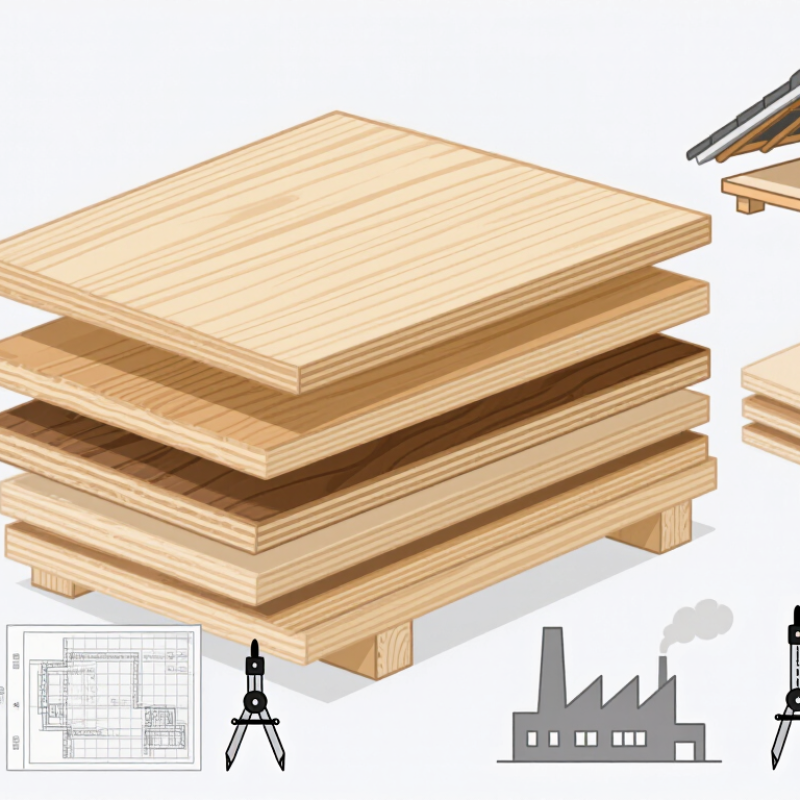
For buyers comparing exterior plywood, EN 636-3 and EN 314-2 Class 3 describe related but different things. EN 636-3 covers plywood intended for exterior conditions, where it may face repeated wetting and drying. EN 314-2 Class 3 specifies the bonding quality needed for exterior exposure. One concerns use conditions; the other concerns the glue bond. That distinction is easy to miss.
A conforming bond does not make a panel waterproof or immune to decay. Check the product’s declared properties, intended application, and installation guidance. On a building site, exposed edges can absorb water even when the panel face looks sound. Seal or protect them as specified, and avoid leaving sheets in standing water. For roof sheathing, cladding, or other applications, also verify thickness, structural performance, and any relevant national requirements. These standards alone do not confirm every performance characteristic a project may need. Small details matter. Inspect the documentation, not just the grade marking; I would still want clear evidence of suitability for the actual exposure.
| Plywood type | Typical composition | Exterior classification to check | Common applications | Buyer considerations |
|---|---|---|---|---|
| Softwood structural plywood | Usually made with softwood veneers; construction and face grade vary by product. | For exterior conditions, check EN 636-3 and EN 314-2 bonding class 3. Confirm structural performance separately where required. | Exterior sheathing, roof and wall components, and other construction uses specified for the product. | Check declared strength properties, thickness, panel dimensions, edge details, and intended exposure before specifying. |
| Hardwood plywood | Hardwood face and/or core veneers; species, core build-up, and surface quality vary. | Do not infer exterior suitability from the word “hardwood.” Verify EN 636-3 and EN 314-2 class 3 for the specific panel. | Protected exterior joinery, panels, and construction applications when the product specification allows. | Confirm face-grade requirements, veneer species, finish compatibility, and whether exposed edges need sealing. |
| Birch plywood | Commonly built from multiple birch veneers; appearance and construction depend on the product. | Exterior use requires the appropriate declared classification; check EN 636-3 and EN 314-2 class 3 rather than relying on species alone. | Precision panels and components in applications where the specified panel properties and exposure conditions are suitable. | Review the technical data sheet for strength, dimensional tolerances, surface grade, and any limits on weather exposure. |
| Exterior-grade plywood with a decorative face | Plywood with a selected face veneer or other specified surface quality; the core and species can differ. | The face appearance does not establish the bond or use class. Verify EN 636-3 and EN 314-2 class 3 in the product documentation. | Exterior-facing panels in designed assemblies, subject to the panel’s declared use and protective finish requirements. | Check whether the finish is factory-applied, compatible with the intended coating system, and suitable for the expected exposure. |
| Film-faced plywood | Plywood surfaced with a resin-impregnated film; film type, edges, and core construction vary. | A film surface alone does not prove EN 636-3 classification or EN 314-2 class 3 bonding. Request documentation for the panel itself. | Formwork and other applications specified for the product; suitability depends on construction, exposure, and intended reuse. | Inspect film integrity and edge sealing, and confirm the manufacturer’s stated use, care, and reuse conditions. |
| Exterior plywood with treated or protected surfaces | Plywood supplied with a specified coating, treatment, or surface protection; details vary by system. | Check the plywood’s EN 636-3 and EN 314-2 class 3 documentation separately from the protection system’s specifications. | Exterior assemblies where the design calls for additional protection against moisture or weathering. | Confirm maintenance needs, coating compatibility, cut-edge treatment, and the exposure limits stated for the finished assembly. |
Classification note: EN 636-3 covers plywood for use in exterior conditions, while EN 314-2 class 3 specifies the bonding quality for exterior conditions. These classifications do not by themselves establish every structural property, surface durability, or suitability for continuous unprotected exposure. Confirm the product’s declaration, intended use, and project requirements; protect and maintain panels as specified.
