Archives


2026 Best Flower Wreath Types for Global Buyers

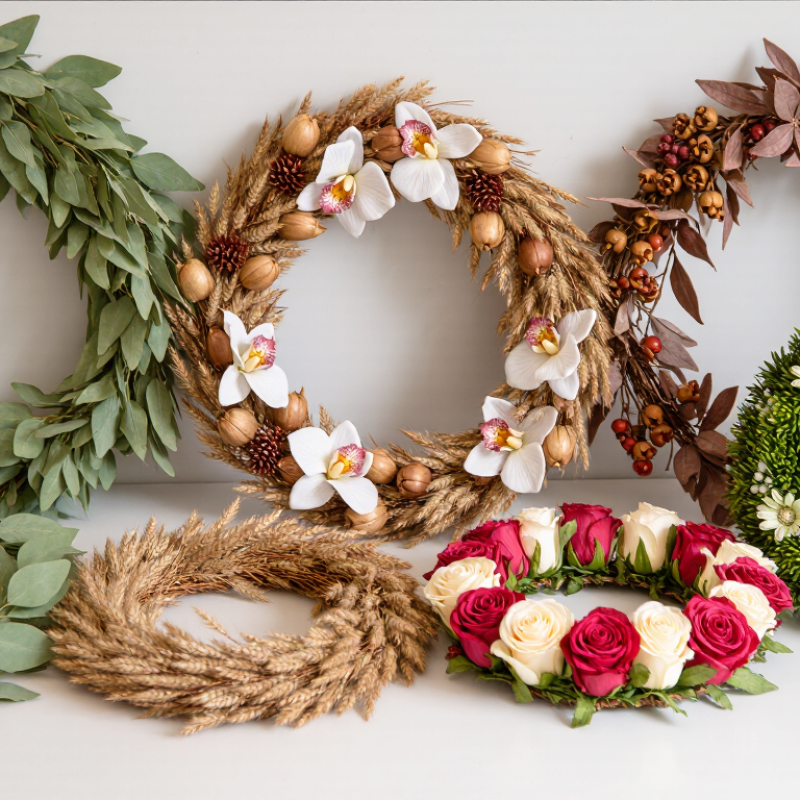
Global buyers are entering 2026 with higher expectations for the Flower Wreath market. They want beauty, durability, and clear sourcing. A wreath may hang on a hotel door, memorial space, wedding table, or seasonal retail display. Each setting demands a different structure.

Renowned floral designer Lewis Miller offers a useful design principle: “The best designs feel alive, not perfect.” This idea matters when comparing fresh, dried, preserved, artificial, and mixed-material Flower Wreath types. Fresh eucalyptus can release a sharp, clean scent. Dried grasses may create a warm, textured surface. Preserved roses often provide richer color, but they require careful packaging and moisture control. Artificial options can travel farther with fewer quality changes, though poor materials may look visibly plastic.

This guide examines the main Flower Wreath categories for international buyers in 2026. It considers appearance, lifespan, customization, packing needs, and practical purchasing risks. Buyers should check stem security, ring strength, color consistency, and product dimensions before placing large orders. A beautiful sample does not always predict a reliable shipment. That is the uncomfortable part. Some designs photograph well but lose volume after transport. Others seem simple yet perform better in stores and homes. Regional climate, customer taste, and installation habits also influence the right choice. No single wreath fits every market. Careful testing remains essential.
2026 Best Flower Wreath Types for Global Buyers

Natural Flower Wreaths for Freshness, Fragrance, and Traditional Décor

2026 Best Flower Wreath Types for Global Buyers

Natural flower wreaths bring freshness, fragrance, and traditional character to homes, ceremonies, and seasonal displays. Fresh rose, lavender, eucalyptus, olive, and baby’s-breath wreaths offer different visual and aromatic experiences. Roses create a generous, romantic appearance. Lavender adds a calm scent. Eucalyptus provides cool green color and a clean, lasting fragrance.

Freshness depends on harvesting time, hydration, and transport temperature. Experienced growers usually cut stems early, condition them in clean water, and protect delicate petals with breathable packaging. Buyers should request recent harvest details and clear product photographs. A wreath with slightly uneven stems may look more natural than a perfectly uniform one. I have found that fragrance can vary greatly between harvests, even within the same flower type.

Keep fresh wreaths away from direct sunlight, heaters, and strong airflow. Light misting may help some designs, but excessive moisture can encourage mold. That detail is easy to overlook. For international orders, confirm the expected arrival time and local plant-import requirements before purchase. Traditional décor also differs by region, so color and flower selection deserve careful discussion. White flowers may suggest purity in one culture and mourning in another. Natural wreaths are beautiful, but they are not completely predictable. Their changing scent, color, and shape are part of their appeal.

Preserved Flower Wreaths for Long-Lasting Indoor and Outdoor Display

2026 Best Flower Wreath Types for Global Buyers

Preserved flower wreaths bring lasting color to indoor doors, walls, and dining spaces. Popular types include hydrangea, lavender, eucalyptus, wheat, and mixed seasonal foliage.

Hydrangea creates volume, while lavender adds a light fragrance and rustic texture.

Eucalyptus offers a clean, modern shape. Dried grasses suit neutral interiors and larger commercial displays.

Material selection should match the display environment. Preserved wreaths usually perform best indoors, away from direct sunlight, heaters, and damp air. For covered outdoor areas, choose tightly secured stems and moisture-resistant backing.

Keep it dry. Even a sheltered porch can experience condensation, wind, and sudden temperature changes. UV exposure may fade delicate petals faster than expected.

Global buyers should request clear specifications before ordering.

Check the wreath diameter, net weight, flower composition, hanging method, packaging protection, and care instructions. Ask whether natural color variation is expected. It often is.

A small change in petal shape can make every wreath look slightly different.

That is part of its character, but it may complicate uniform retail presentation.

Reliable suppliers should provide recent product photos, stable packing methods, and honest guidance about indoor and outdoor service life. Avoid promising permanent beauty; preserved botanicals still need thoughtful placement and occasional dust removal.

Artificial Flower Wreaths for Weather Resistance and Low Maintenance

2026 Best Flower Wreath Types for Global Buyers

Artificial flower wreaths are becoming practical choices for exposed doors, balconies, and memorial spaces. Fortune Business Insights valued the global artificial flowers market at about USD 1.68 billion in 2023. Its report projects steady growth through 2032. This demand reflects convenience, but appearance alone is not enough. Buyers should examine UV-stabilized polymers, coated stems, rust-resistant wire, and secure backing materials. A wreath may look realistic indoors yet fade after one summer outdoors.

Weather resistance depends on construction and climate. ASTM G154-style accelerated UV testing can reveal fading, cracking, and brittleness before shipment. However, laboratory exposure cannot perfectly copy tropical rain, coastal salt, or winter frost. That limitation deserves attention. In practical inspections, tightly attached petals and sealed foam centers reduce water retention. Open designs also dry faster after heavy rain. Low maintenance usually means dusting with a soft brush and checking loose components seasonally, not complete neglect.

Tips: Ask suppliers for UV-test conditions, exposure hours, material details, and care instructions. Request close-up photos of the rear frame and attachment points. For coastal buyers, choose corrosion-resistant metal and avoid untreated steel. For hot regions, lighter colors may hide gradual fading better. Leave drainage space behind the wreath. It is a small detail, but trapped moisture often causes early damage.

2026 Best Flower Wreath Types for Global Buyers

Comparative ratings are based on the general characteristics of commonly used artificial wreath materials. Polyester and polyethylene wreaths typically offer the strongest outdoor weather resistance and require the least maintenance. Silk and paper wreaths are better suited to sheltered indoor or covered outdoor locations.

Seasonal Flower Wreaths for Holidays, Events, and Regional Markets

2026 Best Flower Wreath Types for Global Buyers

Seasonal flower wreaths can help buyers serve holidays, events, and regional markets with greater precision. For winter holidays, evergreen, pinecone, white berry, and deep red arrangements create a familiar seasonal mood. Spring collections often use tulips, daisies, pastel foliage, and lightweight woven bases. Harvest events may need dried grasses, wheat tones, orange flowers, and textured leaves. Wedding wreaths usually benefit from softer colors and balanced shapes.

In practical procurement, buyers should test wreath size, weight, packaging, and color stability before placing large orders. Fresh-looking artificial flowers are useful for long-distance shipping and repeated event use. Natural materials offer stronger texture, but they may react to humidity or temperature changes. A simple sample check matters. Very much.

Regional Preferences and Compliance Considerations

Regional preferences also influence design choices. Bright red and gold may perform well during some festive periods, while muted greenery suits minimalist markets. Local customs can affect flower meanings, so product descriptions should remain accurate and respectful. Buyers should also confirm venue requirements for hanging methods, flame exposure, and recyclable packaging. These details are easy to overlook.

Planning a Flexible Collection

A mixed collection may be safer than one universal design. However, too many styles can increase inventory pressure and confuse buyers. One seasonal plan may fail when weather, shipping delays, or local demand changes. Reviewing sales data after each event can reveal what the original forecast missed. Flexible quantities and clear quality checks support more reliable global purchasing.

How Global Buyers Can Compare Wreath Materials, Sizes, and Suppliers

When comparing flower wreaths for global purchasing, start with the material, not the decoration. Dried flowers offer a natural texture and longer storage. Silk flowers keep their color more consistently during transport. Preserved foliage can look realistic, but it may require humidity protection. Ask for material lists, close-up photos, and sample pieces. Color can change between a studio image and daylight. That small difference matters.

Tips: Measure the wreath by its outside diameter. A 30-centimeter wreath suits doors and small displays. Larger sizes need stronger packaging. Check the frame material, backing, hanging loop, and packed weight. Request carton dimensions before calculating freight. Also ask how suppliers control moisture, breakage, and loose petals. A low unit price may hide costly replacements.

Supplier evaluation should include sample approval, production lead time, and inspection records. Reliable suppliers explain variations instead of promising perfect uniformity. Natural materials are never identical. That is worth remembering. Compare response speed, documentation quality, and payment terms together. A clear specification sheet should state dimensions, flower types, color tolerance, packaging layers, and acceptable defects. I have found that buyers sometimes focus too heavily on appearance. Delivery consistency can matter more than a flawless sample. Build a small trial order before committing to larger seasonal volumes.

2026 Best Flower Wreath Types for Global Buyers – How Global Buyers Can Compare Wreath Materials, Sizes, and Suppliers
Wreath Type Typical Materials Common Diameter Approx. Weight Recommended Use Expected Display Life Weather Resistance Packaging Considerations Typical Order Quantity Supplier Evaluation Priorities
Dried Flower Wreath Dried grasses, preserved flowers, rattan or grapevine base, natural twine 30–50 cm 0.4–1.2 kg Home décor, seasonal displays, gifts, wedding styling 6–24 months indoors when kept dry and away from direct sunlight Low
Indoor or covered outdoor use
Requires moisture protection, corner guards, and crush-resistant cartons Usually 50–200 pieces per style Consistent flower color, low breakage rate, moisture-control packaging, clear material declarations
Preserved Flower Wreath Glycerin-treated foliage, preserved flowers, wire frame, floral foam or fiber backing 30–60 cm 0.6–1.8 kg Premium interior decoration, hospitality, event styling 1–3 years indoors under stable temperature and humidity Low
Not suitable for rain or high humidity
Use dividers, breathable inner wrapping, and protection from compression Usually 30–150 pieces per style Preservation method, colorfastness, odor control, humidity testing, and batch consistency
Artificial Silk Flower Wreath Polyester or nylon petals, plastic stems, wire or foam frame 35–60 cm 0.7–2.0 kg Retail décor, hospitality, recurring seasonal merchandising 2–5 years indoors; shorter under strong sunlight Medium
Only if UV-treated and protected from heavy rain
Individual flower protection, dust-resistant bags, and carton separation for large petals Usually 100–500 pieces per style Petal realism, UV performance, attachment strength, odor, recycled-content options, and color matching
Polyester Outdoor Wreath UV-treated polyester foliage, plastic flowers, galvanized wire or polypropylene frame 40–70 cm 1.0–2.8 kg Front doors, porches, commercial entrances, covered outdoor areas 1–3 seasons depending on sunlight, rain, and temperature High
Better resistance when UV-treated
Use ventilated polybags, reinforced cartons, and moisture-resistant outer packaging Usually 100–500 pieces per style UV test evidence, rust-resistant components, drainage design, color stability, and outdoor-use instructions
Grapevine Wreath Natural grapevine branches, wire ties, dried botanical accents 25–60 cm 0.5–1.5 kg Rustic décor, farmhouse themes, floral arrangements, craft projects 1–3 years indoors when kept dry Medium
Can deteriorate in persistent moisture
Natural variation requires size sorting, protective sleeves, and dry storage Usually 100–1,000 pieces per size Branch density, diameter consistency, pest treatment, mold prevention, and sustainable harvesting documentation
Rattan or Willow Wreath Rattan, willow, bamboo or other flexible plant fibers, natural or painted finish 25–70 cm 0.4–1.8 kg Interior décor, craft bases, wall displays, seasonal retail programs 1–3 years indoors; shorter in damp environments Medium
Requires dry storage and limited exposure
Stacking or nesting can reduce freight volume; use separators to prevent deformation Usually 100–1,000 pieces per size Fiber moisture level, uniform weaving, frame strength, fumigation requirements, and nesting efficiency
Moss Wreath Preserved moss, lichen, twig base, wire, and decorative foliage 30–55 cm 0.8–2.2 kg Biophilic interiors, office décor, hospitality spaces, natural-style displays 1–5 years indoors depending on preservation quality and humidity Low
Keep away from water and condensation
Breathable wrapping is important; avoid sealed damp packaging and excessive compression Usually 50–300 pieces per style Moss coverage, moisture content, color retention, odor, preservation chemicals, and pest-control compliance
Fresh Flower Wreath Fresh seasonal flowers, foliage, floral foam, wire frame, ribbon or water source 30–60 cm 1.5–4.0 kg Weddings, funerals, ceremonies, short-term events 3–14 days depending on flower species, temperature, and hydration Low
Temperature-controlled handling required
Needs ventilated, impact-resistant packaging and rapid delivery with hydration control Often 10–100 pieces per design Cold-chain capability, harvest timing, phytosanitary documents, flower freshness, and delivery reliability

Buyer note: Dimensions, weights, lifespan, minimum order quantities, and transport requirements are typical industry ranges. Final specifications should be confirmed with each supplier using approved samples, packaging tests, and destination-country import regulations.

Close
Enter your email address to receive special offers!
linkedin facebook pinterest youtube rss twitter instagram facebook-blank rss-blank linkedin-blank pinterest youtube twitter instagram